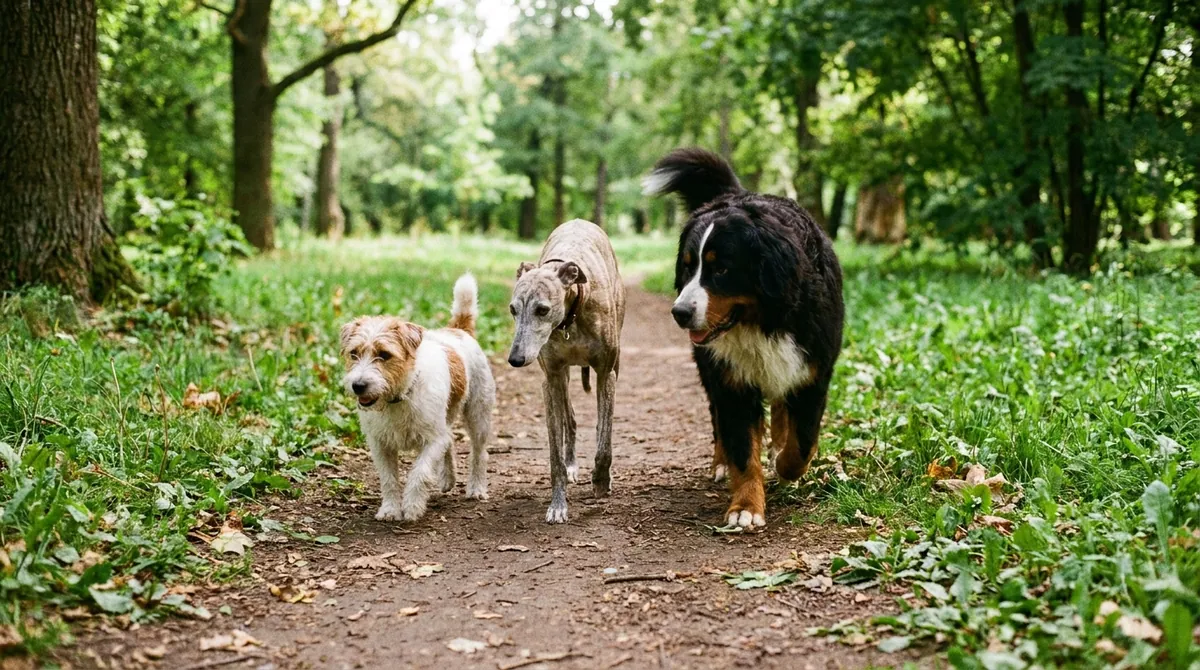
Choose a breed by matching its likely adult needs to your ordinary week, not to a favorite photo. Exercise, coat maintenance, size, vocal style, independence, sociability, prey drive and recurring costs all affect daily life. Breed history gives useful probabilities, but the individual dog’s age, health, early experience and temperament still matter.
Start with your real weekday
Write down work hours, commute, school runs, exercise time, grooming time and who handles the dog when plans change. A breed that fits an ideal weekend may be frustrating on a normal Tuesday.
Separate size from intensity
Small dogs can be highly active, vocal or persistent; giant dogs can be calm indoors but cost more to feed, transport and equip. Compare energy and behavior, not just kilograms.
Look at the job behind the breed
Herding, retrieving, guarding, scent work, terrier work and companionship selected for different behaviors. Those tendencies can appear in chasing, barking, independence, mouth use and interest in training.
Budget for the coat and equipment
Professional grooming, undercoat management, drying time, secure fencing, crate size and vehicle space can change the true cost of ownership.
Meet adults when you can
Puppies of every breed are appealing. Spending time with stable adult examples gives a better picture of size, coat, movement, vocal style and social behavior.
A practical plan you can use this week
Set up the easy version
Begin with list three non-negotiables and three deal-breakers before browsing breeders or rescue listings. Keep the first repetitions deliberately easy. A dog who can succeed has a clear behavior to repeat; a dog who is already over threshold or physically struggling is mostly rehearsing the problem.
Make the first repetition obvious
For the first session, compare at least four breeds or types against the same checklist rather than researching only the breed you already want. The goal is not endurance. It is a clean, understandable success that can be repeated before adding duration, distance or distraction.
Progress one variable at a time
Once the easy version is fluent, talk to owners, breed clubs, trainers, groomers and rescue foster homes to test whether the written description matches everyday reality. If performance suddenly falls apart, reduce difficulty rather than repeating the cue more loudly or assuming the dog is being defiant.
Transfer the skill to ordinary life
Real progress comes from using the skill where it matters. visit adult dogs in homes, classes or responsible breed events and pay attention to what the owners actually do each day. Short planned repetitions in normal routines are usually more valuable than one long weekend session.
Track the change you can actually see
Use a simple success marker: your shortlist gets smaller for practical reasons and every remaining option fits housing, time, budget and preferred activity level. A written weekly note makes gradual improvement visible and helps you avoid changing the plan after one unusually good or difficult day.
Real-World Tip & Practical Observation
A useful real-world test is the “bad-weather Tuesday.” Imagine the dog is adolescent, it is raining, work ran late and you still need to meet exercise, grooming and training needs. If the plan only works when you have two free hours and perfect conditions, the match is probably too demanding.
Common mistakes that make the problem harder
- Choosing solely from appearance or social-media popularity.
- Assuming a small dog automatically needs little training or exercise.
- Ignoring grooming and professional-care costs until after adoption.
- Treating breed tendencies as guarantees about every individual dog.
What progress should look like
A good match does not mean a zero-effort dog. It means the normal work of ownership feels compatible with your lifestyle rather than like a daily negotiation against the dog’s basic needs.
An owner checklist for the next seven days
Day one is for observation and setup: list three non-negotiables and three deal-breakers before browsing breeders or rescue listings. On the next two days, use this first step: compare at least four breeds or types against the same checklist rather than researching only the breed you already want. Keep sessions short enough that you can stop after a good repetition rather than waiting for the dog to become tired, frustrated or distracted. Write down what happened immediately before the behavior, what you did, and what the dog did next. That simple record is more useful than relying on memory at the end of the week.
From days four through seven, change only one difficulty at a time. talk to owners, breed clubs, trainers, groomers and rescue foster homes to test whether the written description matches everyday reality. Use this practical measure: your shortlist gets smaller for practical reasons and every remaining option fits housing, time, budget and preferred activity level. If the numbers or observations get worse for two sessions in a row, make the task easier and rebuild success. The aim is not a perfect dog by Sunday; it is a repeatable routine that gives the dog clear information and gives you evidence that the plan is moving in the right direction.
Frequently asked questions
Are mixed-breed dogs easier to predict?
Not necessarily. Age, observed behavior, foster-home information and known parentage can help, but every individual deserves assessment beyond labels.
Should first-time owners avoid working breeds?
Not automatically, but they should be realistic about exercise, training, management and intensity. Individual lines and dogs also vary widely.
How important is breeder health testing?
For a purebred puppy, ask what screening the national breed club recommends and request verifiable results rather than relying on verbal assurances.
Sources & further reading
Breed and ownership references selected for Choosing a Dog Breed: A Better Match Checklist Than “Which Dog Is Cutest?”. These organizations are independent of Dogtation and are included so readers can verify the underlying guidance.