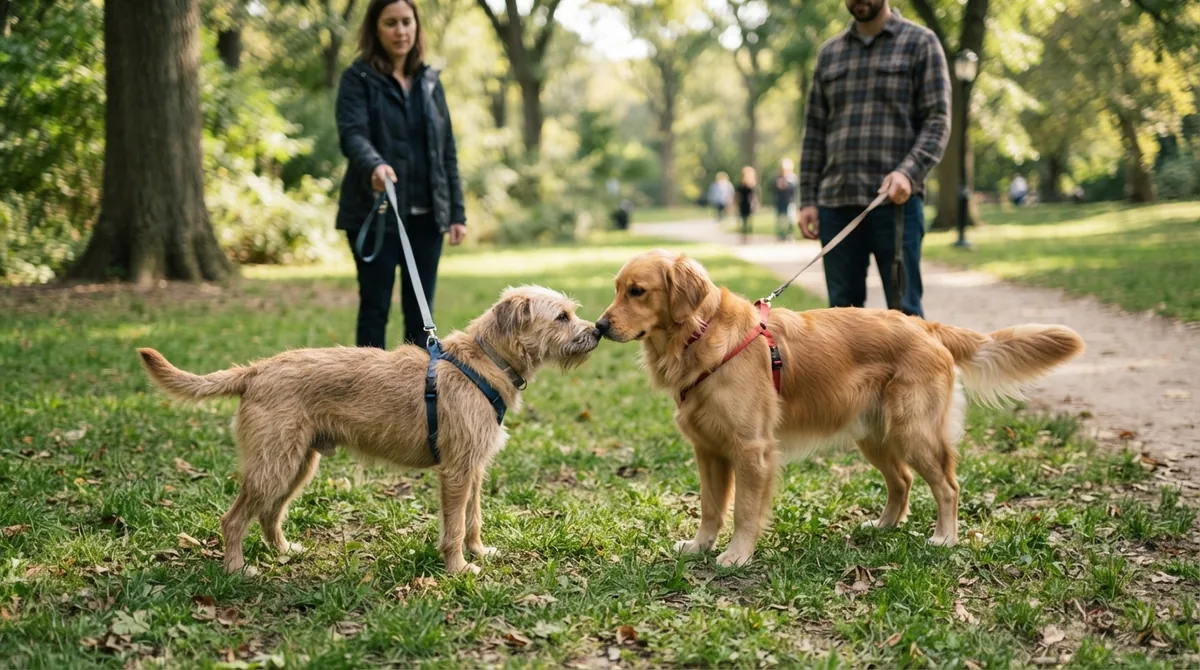
A first dog-to-dog meeting is usually easier when both dogs can move in the same direction with space between them before any face-to-face greeting. Start outdoors in a neutral or low-pressure area, use one handler per dog, keep leashes loose, and interrupt brief greetings before tension builds. Friendship is optional; calm coexistence is a perfectly successful outcome.
Choose neutral space when possible
A quiet outdoor area can reduce pressure compared with bringing an unfamiliar dog directly into a resident dog's home.
Start with parallel walking
Move in the same direction at a comfortable distance. Reward check-ins and relaxed behavior before gradually decreasing space.
Keep greetings brief
A few seconds of sniffing followed by cheerful movement away can be easier than a prolonged face-to-face interaction.
Remove conflict points at home
Initially manage food, chews, toys, beds and tight spaces. Separate dogs when unsupervised until you understand their relationship.
Do not force friendship
Some dogs become close companions; others simply coexist. Calm neutrality is a perfectly good outcome.
Use professional help for risk
A history of serious dog-dog aggression, guarding or bite incidents warrants individualized guidance.
A practical plan you can use this week
Set up the easy version
Begin with choose an open quiet area, two secure leashes and handlers who can create distance without pulling the dogs toward each other. Keep the first repetitions deliberately easy. A dog who can succeed has a clear behavior to repeat; a dog who is already over threshold or physically struggling is mostly rehearsing the problem.
Make the first repetition obvious
For the first session, walk parallel at a comfortable distance and reward each dog for checking in with the handler or calmly noticing the other dog. The goal is not endurance. It is a clean, understandable success that can be repeated before adding duration, distance or distraction.
Progress one variable at a time
Once the easy version is fluent, reduce distance gradually, allow only brief curved greetings, then move apart again before either dog becomes stuck or overly intense. If performance suddenly falls apart, reduce difficulty rather than repeating the cue more loudly or assuming the dog is being defiant.
Transfer the skill to ordinary life
Real progress comes from using the skill where it matters. remove food, high-value chews and crowded doorway pressure when the dogs first enter the home together. Short planned repetitions in normal routines are usually more valuable than one long weekend session.
Track the change you can actually see
Use a simple success marker: both dogs can disengage, move away, sniff the environment and recover after short interactions without being forced back together. A written weekly note makes gradual improvement visible and helps you avoid changing the plan after one unusually good or difficult day.
Real-World Tip & Practical Observation
A useful practical rule is to end the first greeting while it still looks boring. Three seconds of loose sniffing followed by a cheerful walk away can prevent the interaction from becoming a prolonged stare or wrestling match. Owners often keep dogs together because “it was going well,” then miss the moment when one dog wants space.
Common mistakes that make the problem harder
- Tightening both leashes and pulling the dogs nose-to-nose.
- Using toys or food bowls during the first indoor minutes.
- Assuming wagging tails guarantee compatible play.
- Forcing repeated greetings after one dog has moved away or hidden.
What progress should look like
Success is measured by recovery and choice. Dogs who can share space without constant monitoring are doing better than dogs who engage intensely every minute.
An owner checklist for the next seven days
Day one is for observation and setup: choose an open quiet area, two secure leashes and handlers who can create distance without pulling the dogs toward each other. On the next two days, use this first step: walk parallel at a comfortable distance and reward each dog for checking in with the handler or calmly noticing the other dog. Keep sessions short enough that you can stop after a good repetition rather than waiting for the dog to become tired, frustrated or distracted. Write down what happened immediately before the behavior, what you did, and what the dog did next. That simple record is more useful than relying on memory at the end of the week.
From days four through seven, change only one difficulty at a time. reduce distance gradually, allow only brief curved greetings, then move apart again before either dog becomes stuck or overly intense. Use this practical measure: both dogs can disengage, move away, sniff the environment and recover after short interactions without being forced back together. If the numbers or observations get worse for two sessions in a row, make the task easier and rebuild success. The aim is not a perfect dog by Sunday; it is a repeatable routine that gives the dog clear information and gives you evidence that the plan is moving in the right direction.
Frequently asked questions
Should dogs meet off leash?
Only in a secure environment with known social dogs and appropriate supervision. Parallel movement on leash is often easier to control for a first meeting.
What if one dog growls?
Create space rather than punishing the warning. A growl is information that the interaction became uncomfortable.
How long before I leave them alone together?
There is no fixed timeline. Wait until you have a long history of calm, predictable interaction and continue separating when unsupervised if there is any doubt.
Sources & further reading
Daily-care references selected for Introducing Two Dogs: A Lower-Pressure First Meeting. These organizations are independent of Dogtation and are included so readers can verify the underlying guidance.