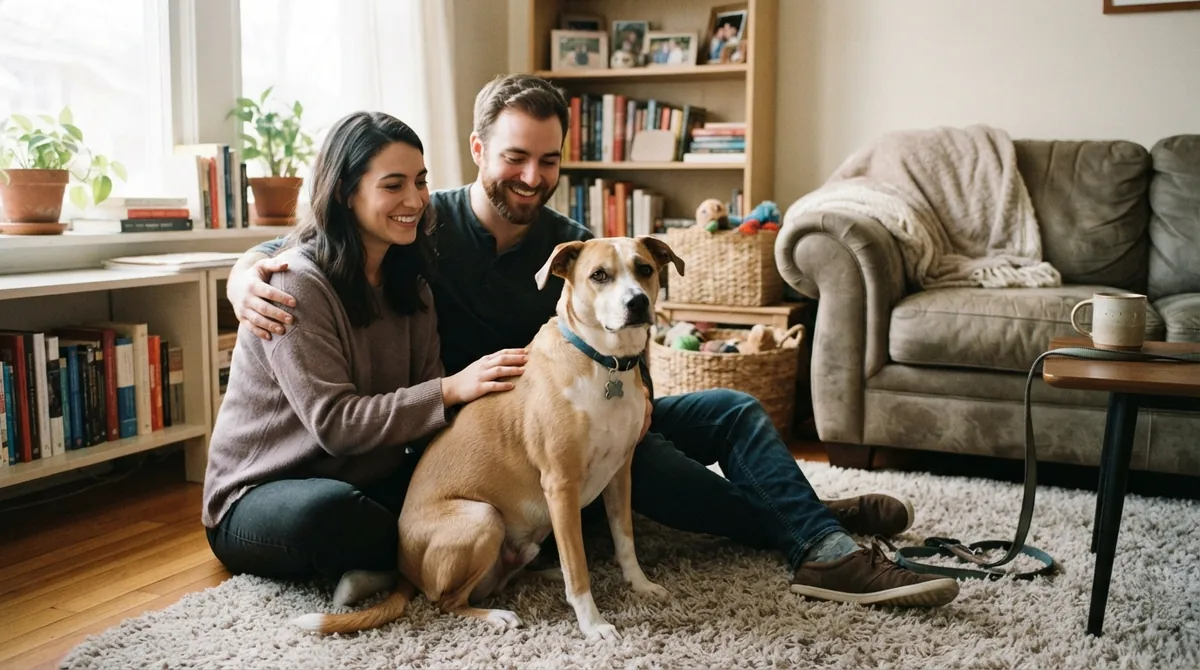
The first month with a rescue dog should be quieter and more predictable than most people expect. Secure doors and gates, establish meals, toilet breaks, sleep and walks, and delay crowded social plans until you understand the dog’s comfort level. Trust grows through repeated safe routines; affection, play and training can increase as the dog shows you what they can handle.
Lower the pressure
A rescue dog may be processing transport, unfamiliar people, new smells and a completely new routine. Keep the first days predictable and avoid a parade of visitors.
Use management immediately
Secure doors and gates, use a properly fitted collar or harness and supervise outdoor time. Newly adopted dogs can be flight risks even when they seem calm.
Build a routine
Consistent meals, toilet breaks, walks and rest periods help the dog predict what comes next.
Let relationships grow
Some dogs seek contact immediately; others need space. Reward voluntary approaches and avoid forcing cuddling or handling.
Expect behavior to change
As the dog becomes comfortable, new behaviors may appear. That does not mean adoption has failed; it means you are seeing more of the dog's real repertoire.
Get support early
Arrange veterinary care and seek qualified training help for fear, guarding, aggression, separation distress or other safety concerns.
A practical plan you can use this week
Set up the easy version
Begin with prepare a quiet resting area, secure identification, a leash or harness that fits well, predictable feeding times and barriers for parts of the home the dog has not learned yet. Keep the first repetitions deliberately easy. A dog who can succeed has a clear behavior to repeat; a dog who is already over threshold or physically struggling is mostly rehearsing the problem.
Make the first repetition obvious
For the first session, keep the first few days boring in a good way: toilet, meals, short walks, rest and gentle voluntary interaction. The goal is not endurance. It is a clean, understandable success that can be repeated before adding duration, distance or distraction.
Progress one variable at a time
Once the easy version is fluent, add rooms, visitors, alone time and new routes one at a time instead of stacking several changes into the same day. If performance suddenly falls apart, reduce difficulty rather than repeating the cue more loudly or assuming the dog is being defiant.
Transfer the skill to ordinary life
Real progress comes from using the skill where it matters. use a written routine for the household so every person follows the same door, feeding and walking rules. Short planned repetitions in normal routines are usually more valuable than one long weekend session.
Track the change you can actually see
Use a simple success marker: the dog begins sleeping deeply, exploring at a normal pace, showing predictable toilet habits and seeking interaction without being coaxed. A written weekly note makes gradual improvement visible and helps you avoid changing the plan after one unusually good or difficult day.
Real-World Tip & Practical Observation
A common mistake is interpreting a very quiet first day as the dog’s permanent personality. Some newly adopted dogs are inhibited by change. Keep notes rather than making big conclusions. By week two or three you may see more play, more opinions and sometimes new challenges; that is often the dog becoming comfortable enough to behave normally.
Common mistakes that make the problem harder
- Inviting many visitors in the first weekend to “socialize” the dog.
- Giving unrestricted house access before you know chewing, marking or escape habits.
- Forcing cuddling or handling because the dog looks sad.
- Changing food, walking route, sleeping location and household rules repeatedly during the adjustment period.
What progress should look like
Adjustment is individual. Look for more predictable eating, sleeping, toileting, exploration and recovery after surprises. A dog can bond quickly and still need months to feel fully secure in new routines.
An owner checklist for the next seven days
Day one is for observation and setup: prepare a quiet resting area, secure identification, a leash or harness that fits well, predictable feeding times and barriers for parts of the home the dog has not learned yet. On the next two days, use this first step: keep the first few days boring in a good way: toilet, meals, short walks, rest and gentle voluntary interaction. Keep sessions short enough that you can stop after a good repetition rather than waiting for the dog to become tired, frustrated or distracted. Write down what happened immediately before the behavior, what you did, and what the dog did next. That simple record is more useful than relying on memory at the end of the week.
From days four through seven, change only one difficulty at a time. add rooms, visitors, alone time and new routes one at a time instead of stacking several changes into the same day. Use this practical measure: the dog begins sleeping deeply, exploring at a normal pace, showing predictable toilet habits and seeking interaction without being coaxed. If the numbers or observations get worse for two sessions in a row, make the task easier and rebuild success. The aim is not a perfect dog by Sunday; it is a repeatable routine that gives the dog clear information and gives you evidence that the plan is moving in the right direction.
Frequently asked questions
What is the 3-3-3 rule?
It is a popular shorthand for decompression stages, not a biological timetable. Some dogs adjust faster or slower, so use behavior rather than a calendar to set expectations.
When should training start?
Simple reinforcement of name response, toileting, leash handling and settling can begin immediately, but keep sessions short and avoid overwhelming demands.
What if the dog shows serious fear or aggression?
Increase safety and distance and seek qualified professional help. Do not deliberately provoke the behavior to test whether it is improving.
Sources & further reading
Daily-care references selected for Bringing Home a Rescue Dog: The First 30 Days. These organizations are independent of Dogtation and are included so readers can verify the underlying guidance.