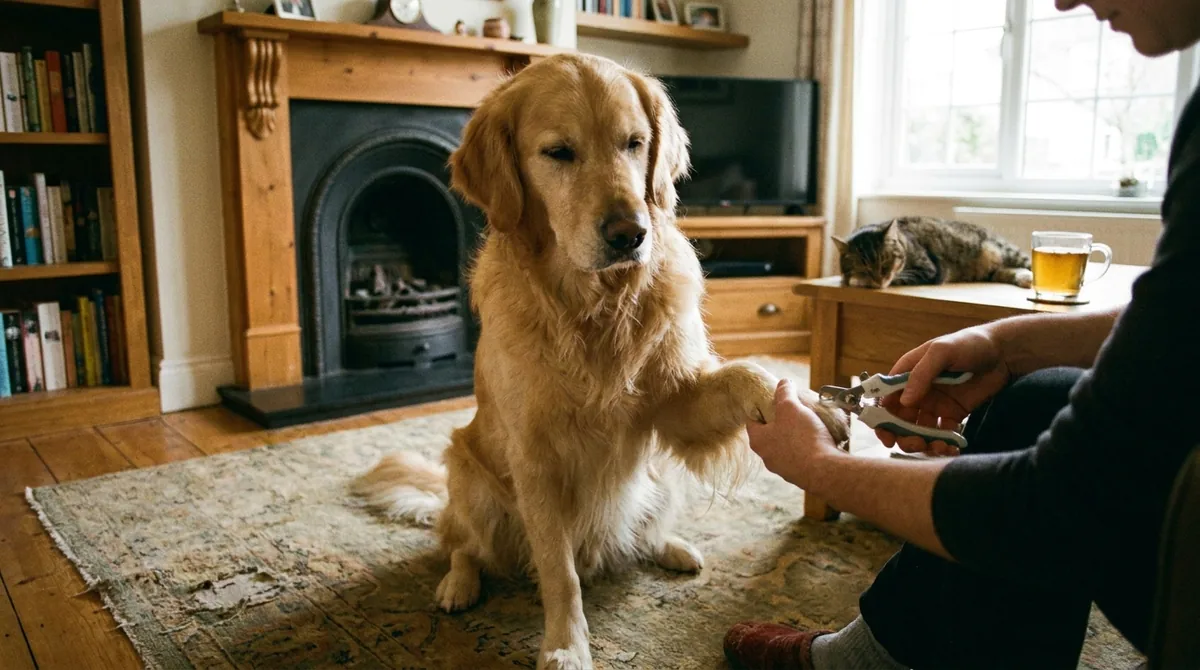
Break nail care into tiny cooperative steps so the clipper or grinder stops predicting restraint and conflict.
Train before you trim
Reward your dog for allowing a brief paw touch, then for seeing the tool, hearing it and feeling it near the nail.
Do one nail if needed
There is no rule that all nails must be completed in one session. Success with one or two nails can build confidence.
Know the quick
The quick contains blood vessels and nerves. Dark nails make it harder to see, so trim conservatively or ask a groomer or veterinary professional to demonstrate.
Use traction and comfortable positioning
A non-slip surface and a position the dog can maintain without struggling improves safety.
Escalating fear needs a different plan
If nail care triggers panic or defensive behavior, stop forcing it and work on cooperative care. A professional can help with training and safe handling.
Practical checklist
- Observe your dog’s normal routine before making big changes.
- Change one variable at a time so you can tell what actually helps.
- Use measured portions, safe equipment and management where relevant.
- Write down changes in appetite, behavior, stool, activity or comfort if health is involved.
- Escalate to a veterinarian or qualified behavior professional when red flags, pain, panic or safety risk appear.
Frequently asked questions
Should every dog follow the same routine?
No. Breed tendencies can be useful background, but individual age, health, learning history and environment are more important than a generic rule.
How quickly should I expect a change?
Simple management changes can help immediately, while fitness, weight, training and behavior changes usually require consistent practice over days or weeks.
When should I stop using online advice and call a professional?
Contact a veterinarian for sudden health changes, pain, repeated vomiting, breathing trouble, collapse, toxin exposure or other urgent signs. For aggression, panic or bite risk, use individualized professional support.
Editorial note: DogWithDog content is educational and does not diagnose, prescribe or replace veterinary care.