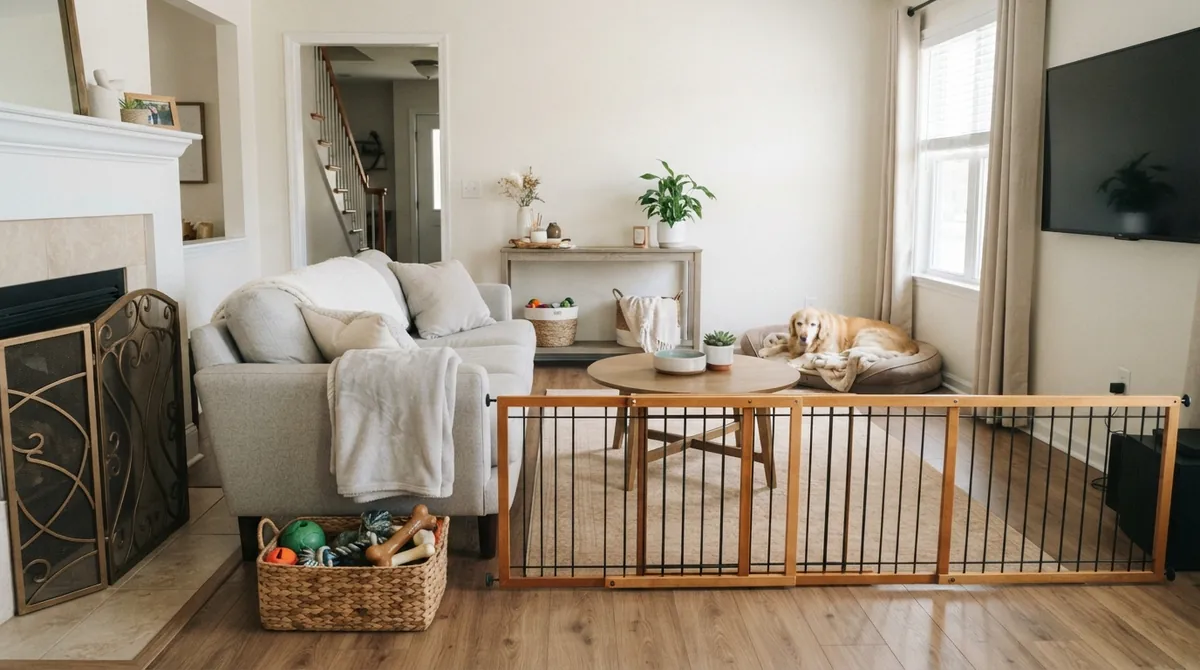
Prevent common emergencies by controlling access to medications, food hazards, electrical cords, rubbish and escape routes.
Kitchen
Secure bins, keep chocolate, grapes, xylitol products, alcohol and medications out of reach, and never leave cooked bones or skewers accessible.
Bathroom
Close medication and supplement cabinets, store cleaners safely and keep razors or small swallowable objects off the floor.
Living areas
Manage electrical cords, batteries, children's toys and reclining furniture mechanisms. Check houseplants before assuming they are pet-safe.
Bedroom and laundry
Laundry piles can hide socks and underwear that some dogs swallow. Store nicotine products, cosmetics and medication securely.
Garden and garage
Check gates, fertilizers, pesticides, rodenticides, antifreeze and mushrooms. Keep automotive chemicals inaccessible.
Build habits, not just barriers
A dog-proof home works best when everyone in the household knows which items require immediate cleanup and which doors or gates must remain secured.
Practical checklist
- Observe your dog’s normal routine before making big changes.
- Change one variable at a time so you can tell what actually helps.
- Use measured portions, safe equipment and management where relevant.
- Write down changes in appetite, behavior, stool, activity or comfort if health is involved.
- Escalate to a veterinarian or qualified behavior professional when red flags, pain, panic or safety risk appear.
Frequently asked questions
Should every dog follow the same routine?
No. Breed tendencies can be useful background, but individual age, health, learning history and environment are more important than a generic rule.
How quickly should I expect a change?
Simple management changes can help immediately, while fitness, weight, training and behavior changes usually require consistent practice over days or weeks.
When should I stop using online advice and call a professional?
Contact a veterinarian for sudden health changes, pain, repeated vomiting, breathing trouble, collapse, toxin exposure or other urgent signs. For aggression, panic or bite risk, use individualized professional support.
Editorial note: DogWithDog content is educational and does not diagnose, prescribe or replace veterinary care.