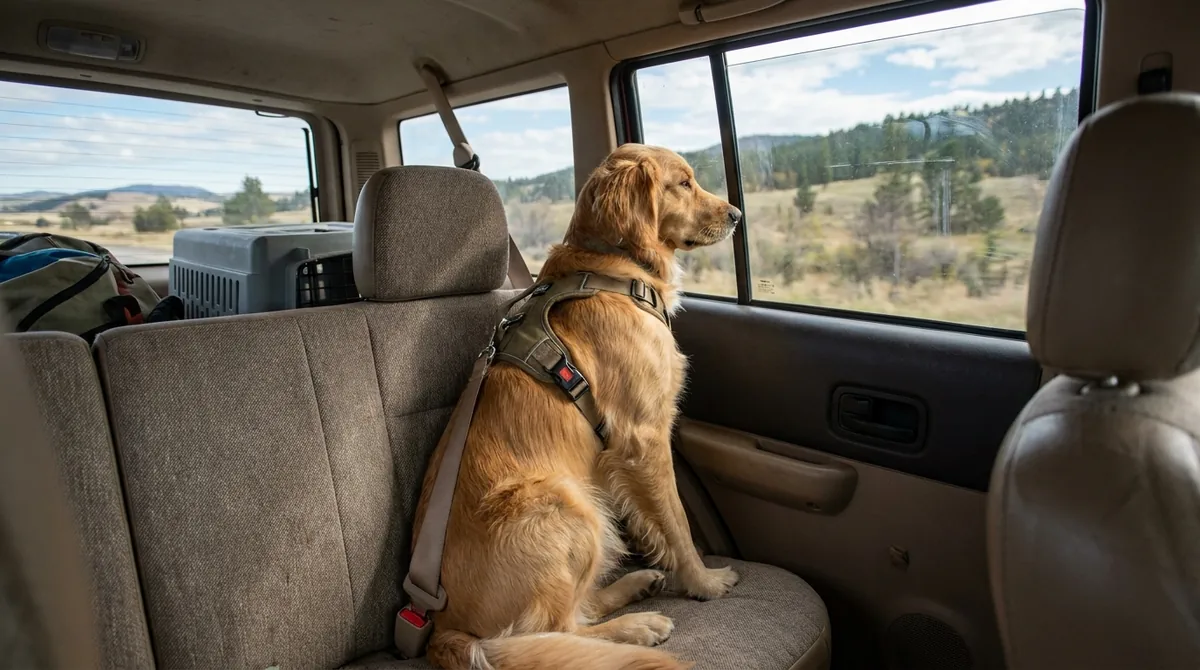
Prepare identification, health records, restraint, food, medications and a realistic routine before you travel.
Confirm identification
Check that the microchip registration and collar tag use current contact information. Carry a recent photo and an emergency contact.
Plan safe restraint
Use a secure crate or appropriately designed vehicle restraint rather than allowing free movement in the car.
Pack familiar essentials
Bring regular food, medications, bowls, waste bags, a leash, bedding and a basic first-aid kit. Sudden diet changes during travel can create avoidable GI problems.
Research the destination
Know local leash rules, veterinary clinics, weather and accommodation policies before arrival.
Practice short trips first
If your dog has limited car experience, build duration gradually. Motion sickness, panic or severe travel anxiety deserves veterinary discussion before a long trip.
Practical checklist
- Observe your dog’s normal routine before making big changes.
- Change one variable at a time so you can tell what actually helps.
- Use measured portions, safe equipment and management where relevant.
- Write down changes in appetite, behavior, stool, activity or comfort if health is involved.
- Escalate to a veterinarian or qualified behavior professional when red flags, pain, panic or safety risk appear.
Frequently asked questions
Should every dog follow the same routine?
No. Breed tendencies can be useful background, but individual age, health, learning history and environment are more important than a generic rule.
How quickly should I expect a change?
Simple management changes can help immediately, while fitness, weight, training and behavior changes usually require consistent practice over days or weeks.
When should I stop using online advice and call a professional?
Contact a veterinarian for sudden health changes, pain, repeated vomiting, breathing trouble, collapse, toxin exposure or other urgent signs. For aggression, panic or bite risk, use individualized professional support.
Editorial note: DogWithDog content is educational and does not diagnose, prescribe or replace veterinary care.