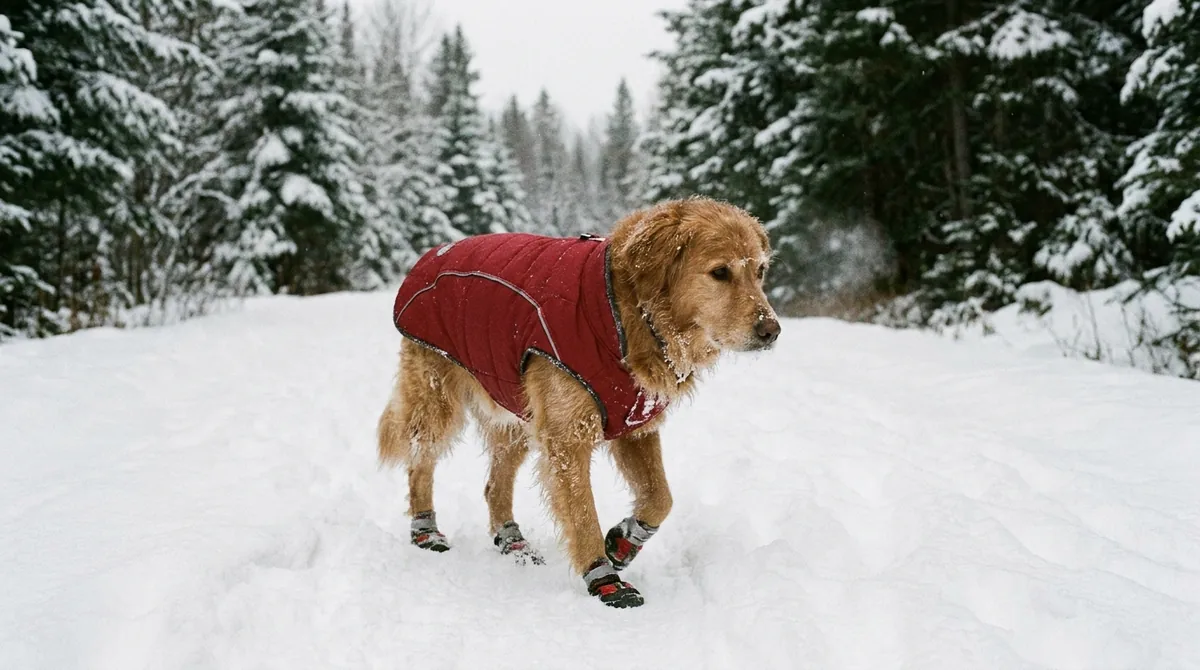
Cold tolerance varies dramatically. Use coat type, body size, age, wind and wetness to decide when protection is needed.
Breed is only part of the answer
A healthy northern breed may enjoy cold that is uncomfortable for a tiny short-coated dog. Seniors, puppies and thin dogs often need more protection.
Wet plus wind changes everything
A damp coat loses insulation and wind increases heat loss. Shorten exposure when conditions deteriorate.
Protect paws
Ice, salt and de-icing chemicals can irritate pads. Rinse and dry paws after walks and consider well-fitted boots for dogs that tolerate them.
Watch the dog, not the clock
Shivering, lifting paws, slowing down, seeking shelter or appearing distressed are reasons to head inside.
Warm gradually
Provide a dry warm environment after exposure. Severe lethargy, weakness or suspected hypothermia requires veterinary attention.
Practical checklist
- Observe your dog’s normal routine before making big changes.
- Change one variable at a time so you can tell what actually helps.
- Use measured portions, safe equipment and management where relevant.
- Write down changes in appetite, behavior, stool, activity or comfort if health is involved.
- Escalate to a veterinarian or qualified behavior professional when red flags, pain, panic or safety risk appear.
Frequently asked questions
Should every dog follow the same routine?
No. Breed tendencies can be useful background, but individual age, health, learning history and environment are more important than a generic rule.
How quickly should I expect a change?
Simple management changes can help immediately, while fitness, weight, training and behavior changes usually require consistent practice over days or weeks.
When should I stop using online advice and call a professional?
Contact a veterinarian for sudden health changes, pain, repeated vomiting, breathing trouble, collapse, toxin exposure or other urgent signs. For aggression, panic or bite risk, use individualized professional support.
Editorial note: DogWithDog content is educational and does not diagnose, prescribe or replace veterinary care.