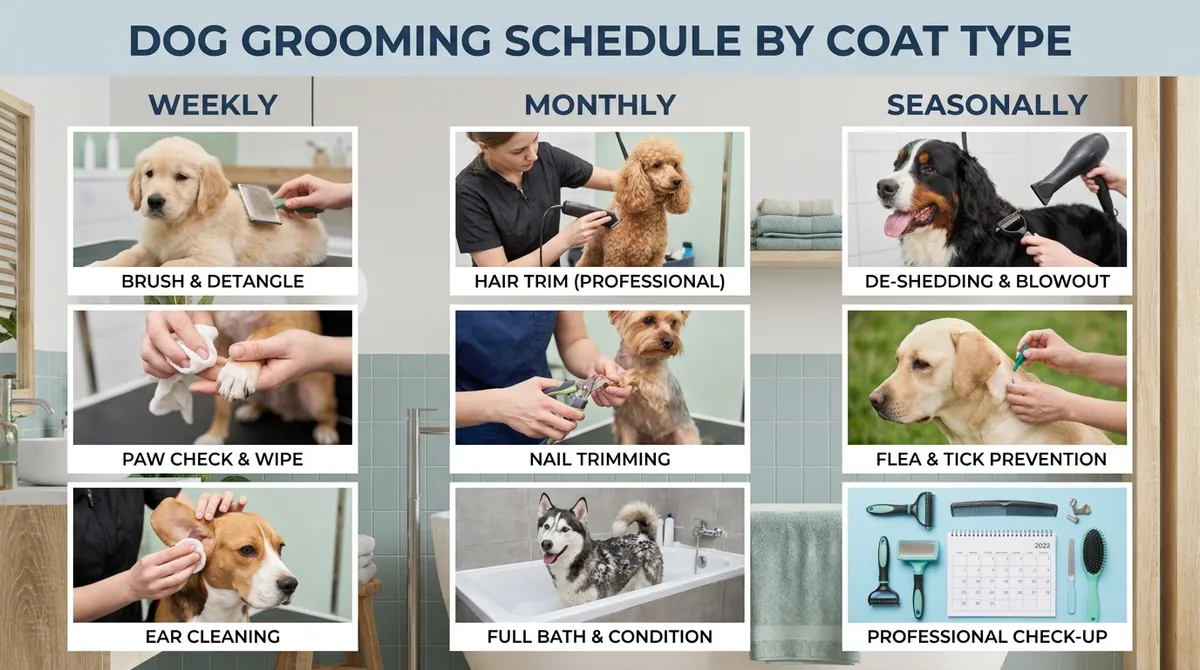
Build a realistic grooming routine for smooth, double, curly, wire and long coats, plus universal nail, ear, skin and dental checks.
Every dog needs a body check
Use grooming time to notice lumps, skin redness, parasites, broken nails, ear odor, paw injuries and changes in coat quality. New painful or inflamed areas deserve veterinary care.
Smooth coats
Short-coated dogs often need less brushing but still shed. A rubber grooming tool, nail care, skin checks and occasional bathing may be enough for many.
Double coats
Northern and herding breeds can shed heavily. Brush to remove loose undercoat without shaving a healthy double coat as a routine shortcut.
Curly and continuously growing coats
Poodles, bichon-type dogs and similar coats need frequent brushing plus professional clipping to prevent mats close to the skin.
Wire coats
Some terriers are maintained by clipping while show-style coats may be hand stripped. Ask a groomer what method suits the coat and lifestyle.
Long silky coats
Daily or near-daily brushing may be necessary in friction zones such as ears, armpits and behind the legs. Shorter pet trims can reduce maintenance.
Nails, ears and teeth are separate tasks
Nail length affects footing; ears should be cleaned only when appropriate for the dog; and tooth brushing is the most direct at-home dental hygiene tool. Pain, odor or discharge warrants professional evaluation.
Practical checklist
- Write down what is normal for your dog before changing several things at once.
- Use measured food, secure equipment and environmental management where relevant.
- Review the plan after several days and look for a trend rather than reacting to one unusually good or bad day.
- Stop and seek professional help when pain, breathing trouble, collapse, toxin exposure, severe fear or bite risk enters the picture.
Frequently asked questions
Can breed alone tell me what to do?
No. Breed can provide context, but age, health, body condition, environment and individual temperament should drive decisions.
How do I know whether advice online is enough?
Online guidance is best for education and routine planning. Diagnosis, medication decisions, persistent symptoms, pain and emergencies require veterinary care; serious behavior problems require individualized assessment.
Dogtation summarizes general educational guidance and does not claim that these organizations reviewed this page.