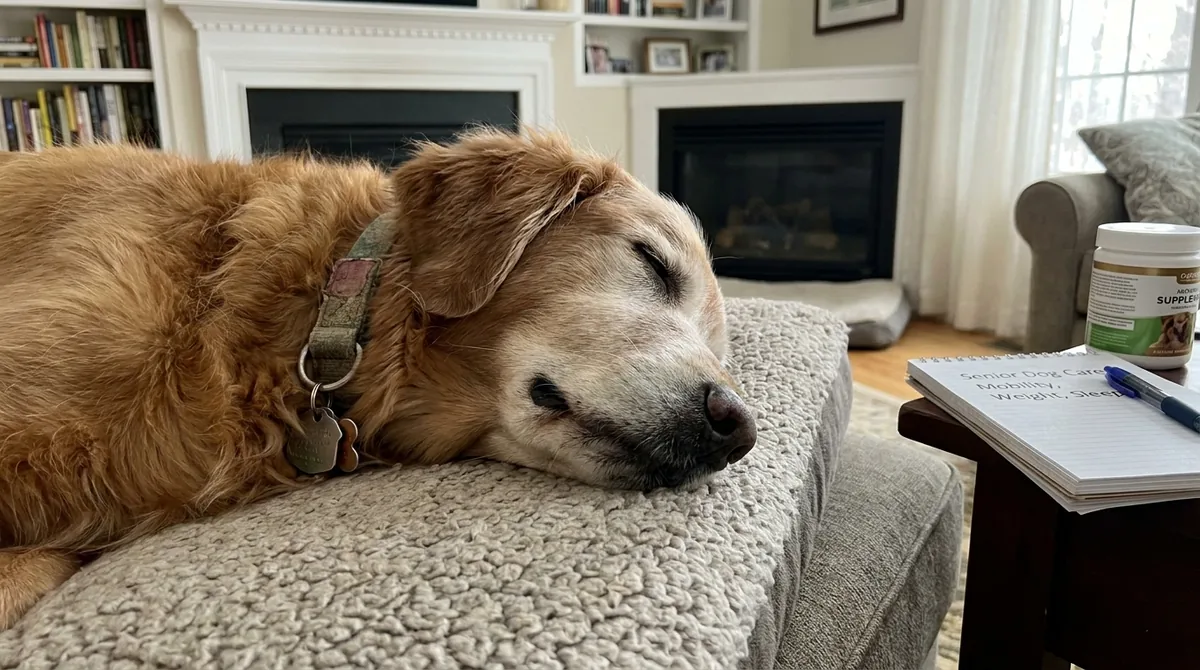
Small changes in the home can protect comfort, but “getting old” should never be used to dismiss pain or new medical signs.
Age is a life stage, not a diagnosis
Slower movement can reflect normal aging, arthritis, heart disease, neurologic problems or other conditions. New change deserves assessment.
Protect traction and access
Use non-slip rugs, ramps when appropriate, lower-entry beds and easy water access. Long nails and slippery floors can make mobility harder.
Preserve muscle with appropriate activity
Shorter, more frequent walks and gentle strength exercises may be more sustainable than occasional long outings. Ask a veterinarian or rehabilitation professional about pain or mobility limits.
Monitor body and muscle condition
Older dogs may gain fat while losing muscle. Weight alone can hide this change, so track body condition and muscle over time.
Keep the brain engaged
Easy scent games, familiar tricks and predictable exploration can support engagement without demanding intense exercise.
Watch sleep, toileting and behavior
Night waking, house soiling, new anxiety, confusion or altered interaction can have medical or cognitive causes. Record patterns and discuss them at veterinary visits.
Use a quality-of-life log
Track appetite, mobility, comfort, social interest, sleep and good versus difficult days. A written record helps families and veterinary teams make more objective decisions.
Practical checklist
- Write down what is normal for your dog before changing several things at once.
- Use measured food, secure equipment and environmental management where relevant.
- Review the plan after several days and look for a trend rather than reacting to one unusually good or bad day.
- Stop and seek professional help when pain, breathing trouble, collapse, toxin exposure, severe fear or bite risk enters the picture.
Frequently asked questions
Can breed alone tell me what to do?
No. Breed can provide context, but age, health, body condition, environment and individual temperament should drive decisions.
How do I know whether advice online is enough?
Online guidance is best for education and routine planning. Diagnosis, medication decisions, persistent symptoms, pain and emergencies require veterinary care; serious behavior problems require individualized assessment.
Dogtation summarizes general educational guidance and does not claim that these organizations reviewed this page.