Enrichment is not endless stimulation. Build a day that lets dogs use natural behaviors while also practicing recovery and calm.
Start with the dog in front of you
A senior companion and a young working breed may enjoy different intensity, but both can benefit from controlled opportunities to sniff, search, chew and learn.
Sniffing is a major activity
Slow decompression walks, scatter feeding and scent searches let dogs process the environment through their strongest sense.
Chewing can support calm behavior
Use appropriately sized, supervised chew items and count edible chews toward daily calories. Remove items that splinter or are small enough to swallow.
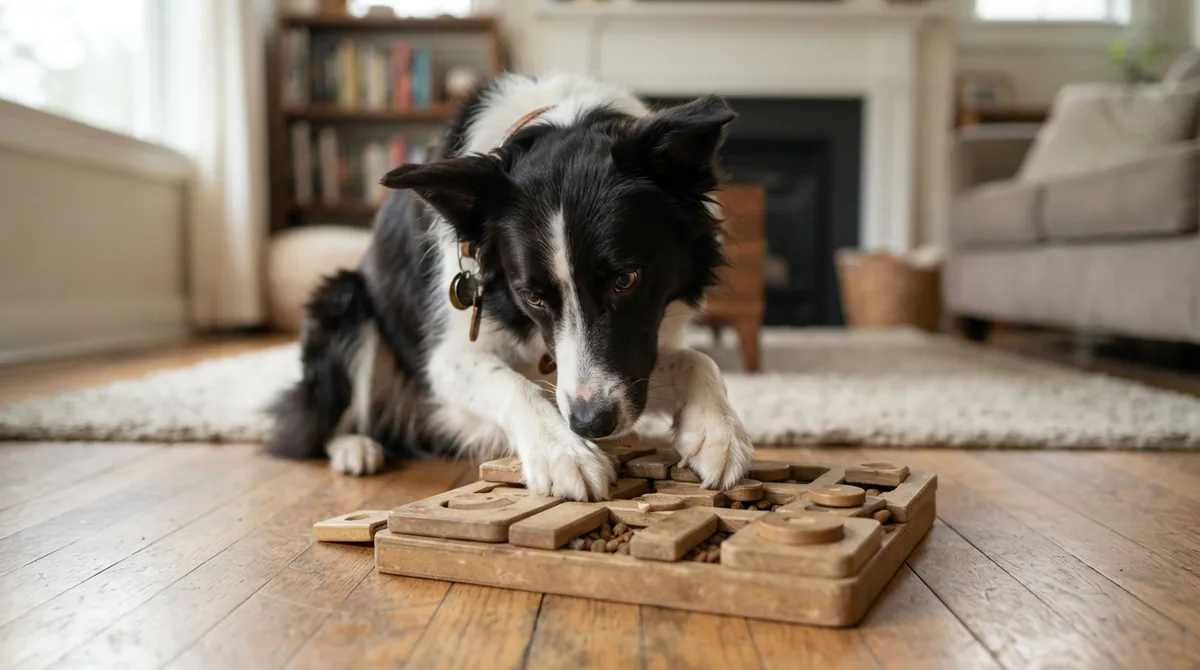
Food puzzles should have an easy mode
A puzzle that creates frustration is not automatically enriching. Begin with easy success and increase complexity as the dog learns.
Training is enrichment when it stays understandable
Short sessions teaching targeting, object names, tricks or cooperative care can provide focused mental work.
Include social choice
Some dogs enjoy play with familiar dogs or people; others prefer parallel walks or quiet companionship. Social enrichment should not mean forced interaction.
Rest is part of the enrichment plan
A dog kept busy all day may become more aroused, not more settled. Protect undisturbed sleep and use calm activities before bedtime.
Practical checklist
- Write down what is normal for your dog before changing several things at once.
- Use measured food, secure equipment and environmental management where relevant.
- Review the plan after several days and look for a trend rather than reacting to one unusually good or bad day.
- Stop and seek professional help when pain, breathing trouble, collapse, toxin exposure, severe fear or bite risk enters the picture.
Frequently asked questions
Can breed alone tell me what to do?
No. Breed can provide context, but age, health, body condition, environment and individual temperament should drive decisions.
How do I know whether advice online is enough?
Online guidance is best for education and routine planning. Diagnosis, medication decisions, persistent symptoms, pain and emergencies require veterinary care; serious behavior problems require individualized assessment.
Dogtation summarizes general educational guidance and does not claim that these organizations reviewed this page.