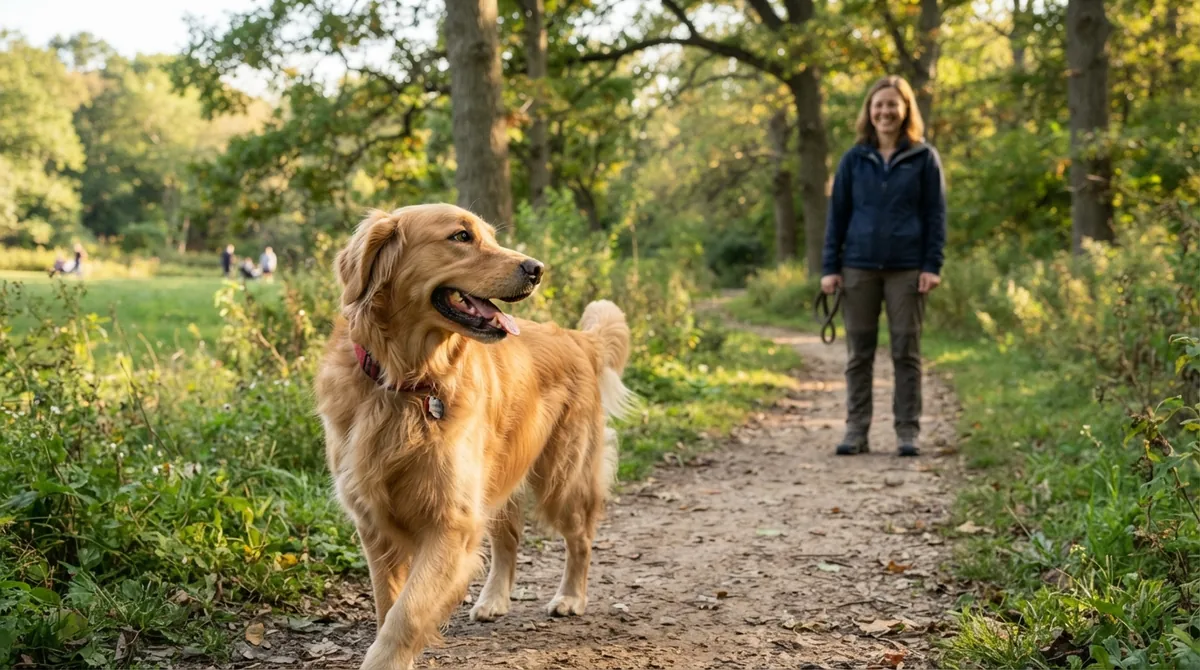
Build a recall that has value, survives distractions and stays protected by smart management around roads, wildlife and other high-risk environments.
Pick a cue you can protect
Choose one word or whistle and avoid using it for situations where you know your dog will ignore you. Repeated failure teaches that the cue is optional.
Make coming to you excellent news
Reward generously and often release the dog back to the activity. If recall always ends the walk or fun, the dog has a reason to hesitate.
Reward check-ins before calling
Dogs who frequently look back at their person are easier to recall. Mark and pay spontaneous orientation on walks.
Use a long line for real-world practice
A long line allows distance while preventing a dangerous self-rewarding chase. Handle it with gloves and open space, avoiding tangles around people or dogs.
Train at the edge of distraction
Call before your dog is fully locked onto another animal, smell or person. Difficulty should increase gradually.
Create an emergency recall
Pair a separate emergency cue with exceptional rewards and practice it sparingly. Never use it casually when you cannot reinforce strongly.
Management remains part of success
No recall is guaranteed. Secure fencing and leashes are appropriate around traffic, livestock, wildlife and locations where mistakes could be catastrophic.
Practical checklist
- Write down what is normal for your dog before changing several things at once.
- Use measured food, secure equipment and environmental management where relevant.
- Review the plan after several days and look for a trend rather than reacting to one unusually good or bad day.
- Stop and seek professional help when pain, breathing trouble, collapse, toxin exposure, severe fear or bite risk enters the picture.
Frequently asked questions
Can breed alone tell me what to do?
No. Breed can provide context, but age, health, body condition, environment and individual temperament should drive decisions.
How do I know whether advice online is enough?
Online guidance is best for education and routine planning. Diagnosis, medication decisions, persistent symptoms, pain and emergencies require veterinary care; serious behavior problems require individualized assessment.
Dogtation summarizes general educational guidance and does not claim that these organizations reviewed this page.