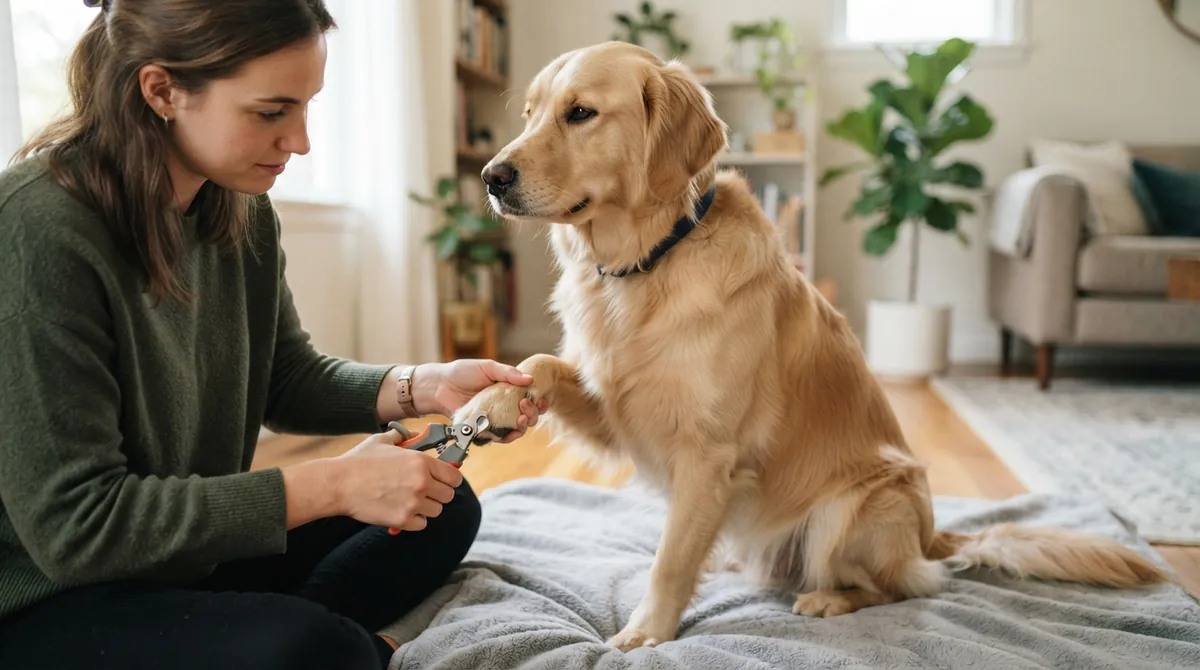
A practical reward-based plan for nail-trim confidence. Keep sessions short, prevent rehearsal of the unwanted behavior, and lower difficulty whenever your dog starts to struggle.
Start away from the nails
Reward calm paw touches and brief paw lifts before the clipper or grinder appears.
Condition the tool
Let the dog see and sniff the tool, hear a grinder from a distance, and receive treats without any nail being touched.
Touch one nail
Bring the tool to a single nail, reward, and stop. The first goal is emotional comfort, not a complete manicure.
Trim tiny amounts
When the dog is relaxed, clip or grind a very small amount from one nail and reinforce generously. End on success.
Get help for painful or overgrown nails
Very long nails, injured nails or dogs with severe handling fear may need a groomer or veterinary team using a low-stress plan.
How to progress without getting stuck
Track the percentage of successful repetitions instead of simply making sessions longer. If your dog succeeds roughly four out of five times, make one part slightly harder. If success drops sharply, move farther from the distraction, shorten duration or increase reward value.
Common mistakes
- Repeating the cue after the dog has already shown that the setup is too hard.
- Training only during the real problem instead of rehearsing easy versions first.
- Relying on correction while allowing the unwanted behavior to keep paying off.
- Increasing duration, distance and distraction simultaneously.
- Ignoring pain, fear or panic that can make an apparent “training problem” worse.
When to get individual help
Seek a qualified reward-based trainer or veterinary behavior professional for aggression, resource guarding with bite risk, separation panic, severe fear or behavior that creates a safety risk. Sudden behavior change can also have a medical cause, so involve your veterinarian when the change is new or unexplained.
Frequently asked questions
How long should a session be?
Often three to ten minutes is enough. Several short successful sessions are easier to learn from than one long frustrating session.
Do I have to use food forever?
No, but reinforcement does not disappear. As the behavior becomes fluent you can use intermittent food plus real-life rewards such as sniffing, play, movement and access to things your dog values.
What if my dog will not take treats?
In a difficult environment, refusal of food can signal stress or excessive arousal. Increase distance or choose an easier setting before assuming the dog is unmotivated.
Dogtation summarizes general educational guidance and does not claim that these organizations reviewed this page.