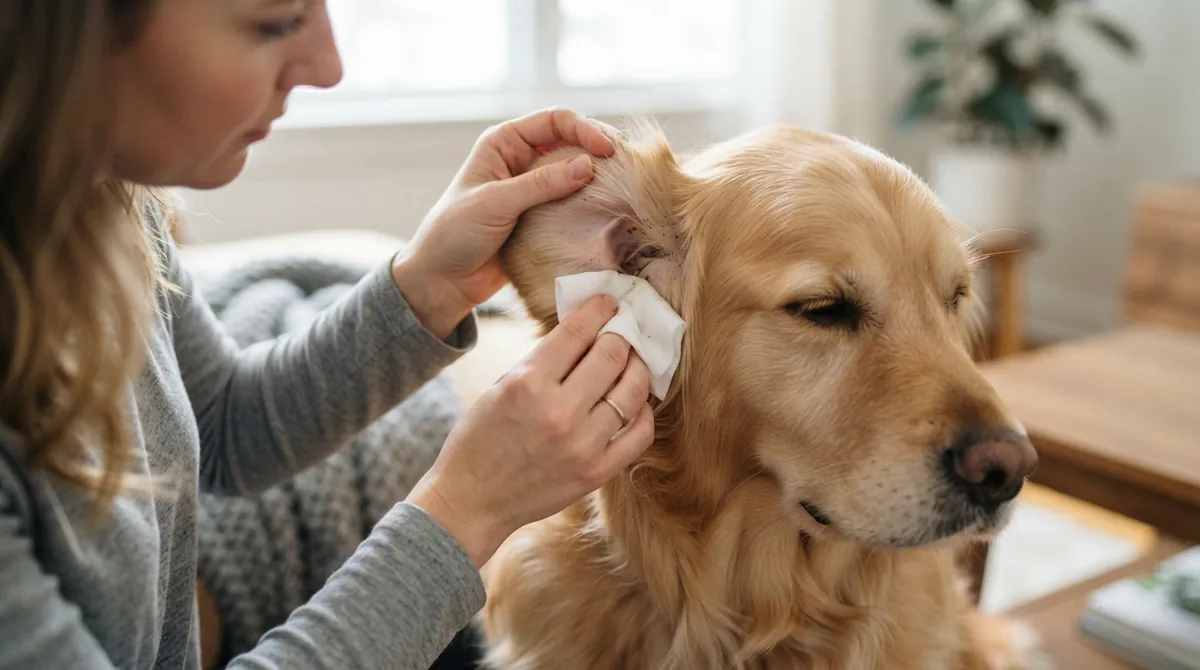
Healthy ears do not all need the same cleaning schedule; use a gentle routine and recognize signs that need veterinary care.
Do not clean simply because ears exist
Some dogs need regular cleaning while others rarely do. Over-cleaning can irritate the ear canal.
Use a product intended for dogs
Avoid inserting cotton swabs deep into the canal and avoid home mixtures unless your veterinarian recommends them.
Make the process predictable
Reward handling, lift the ear gently, apply cleaner as directed, massage the base and let the dog shake before wiping visible debris.
Know infection signs
Pain, strong odor, redness, swelling, discharge, repeated head shaking or loss of balance deserves veterinary evaluation rather than repeated home cleaning.
Practical checklist
- Observe your dog’s normal routine before making big changes.
- Change one variable at a time so you can tell what actually helps.
- Use measured portions, safe equipment and management where relevant.
- Write down changes in appetite, behavior, stool, activity or comfort if health is involved.
- Escalate to a veterinarian or qualified behavior professional when red flags, pain, panic or safety risk appear.
Frequently asked questions
Should every dog follow the same routine?
No. Breed tendencies can be useful background, but individual age, health, learning history and environment are more important than a generic rule.
How quickly should I expect a change?
Simple management changes can help immediately, while fitness, weight, training and behavior changes usually require consistent practice over days or weeks.
When should I stop using online advice and call a professional?
Contact a veterinarian for sudden health changes, pain, repeated vomiting, breathing trouble, collapse, toxin exposure or other urgent signs. For aggression, panic or bite risk, use individualized professional support.
Editorial note: DogWithDog content is educational and does not diagnose, prescribe or replace veterinary care.