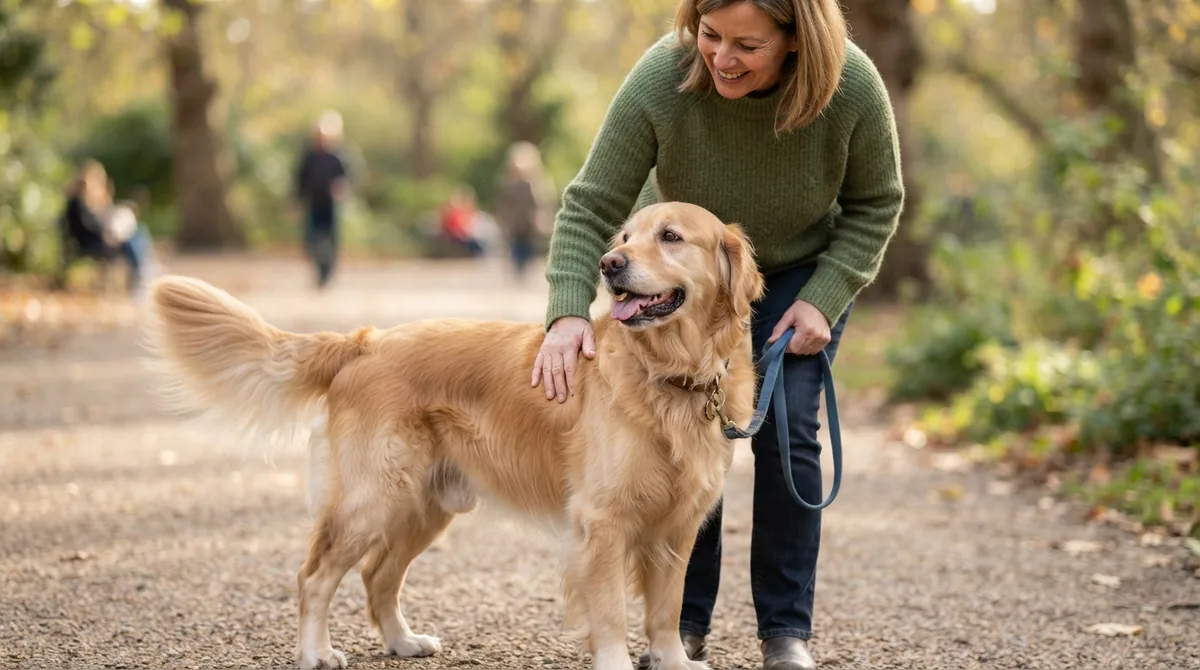
Dog body language should be read as a whole pattern, not as one isolated tail, ear or yawn. Weight shift, muscle tension, mouth shape, eye movement, tail carriage, distance-seeking and recovery all add context. Owners who notice early discomfort can create space before growling, snapping or escape behavior becomes necessary.
Loose versus stiff matters
A relaxed dog usually moves fluidly. Stiff posture, freezing or sudden stillness can signal discomfort even when the dog is not growling.
A wag is not always friendly
Tail height, speed, tension and whole-body movement matter. A high stiff wag can occur during arousal or conflict.
Look at the mouth and eyes
Soft eyes and a relaxed open mouth differ from hard staring, tightly closed lips or repeated lip licking in a stressful context.
Notice weight shifts
Leaning away, crouching, hiding behind a person or repeatedly trying to leave are requests for distance.
Respect growls
A growl communicates discomfort. Punishing it may remove a useful warning while leaving the underlying emotion intact.
Context changes meaning
Yawning after waking is normal; repeated yawning during handling may signal stress. Build your interpretation from clusters of signals and the situation.
A practical plan you can use this week
Set up the easy version
Begin with watch your dog during ordinary low-stakes moments and learn what relaxed ears, eyes, mouth, tail and posture look like for that individual. Keep the first repetitions deliberately easy. A dog who can succeed has a clear behavior to repeat; a dog who is already over threshold or physically struggling is mostly rehearsing the problem.
Make the first repetition obvious
For the first session, compare loose movement with sudden stillness, leaning away, lip licking, head turns, whale eye, tucked posture or a hard forward weight shift. The goal is not endurance. It is a clean, understandable success that can be repeated before adding duration, distance or distraction.
Progress one variable at a time
Once the easy version is fluent, practice responding to early signals by adding distance, pausing handling or giving the dog a clear exit instead of waiting for escalation. If performance suddenly falls apart, reduce difficulty rather than repeating the cue more loudly or assuming the dog is being defiant.
Transfer the skill to ordinary life
Real progress comes from using the skill where it matters. use body-language checks during greetings, grooming, child interactions, veterinary handling, dog-dog encounters and busy walks. Short planned repetitions in normal routines are usually more valuable than one long weekend session.
Track the change you can actually see
Use a simple success marker: you can predict when your dog needs space earlier, and the dog recovers more quickly because subtle signals are respected. A written weekly note makes gradual improvement visible and helps you avoid changing the plan after one unusually good or difficult day.
Real-World Tip & Practical Observation
A powerful practical habit is to take five-second videos of calm, safe situations and watch them without sound. Owners often notice tension they missed in real time: a closed mouth, weight shifted backward, repeated head turns or a tail that stopped moving. Video review is useful only when the dog is safe; never prolong a stressful interaction to capture footage.
Common mistakes that make the problem harder
- Assuming a wagging tail always means friendliness.
- Treating a growl as disobedience instead of information.
- Forcing a dog to remain in contact after repeated avoidance signals.
- Judging posture without considering the situation, breed anatomy and the dog’s normal baseline.
What progress should look like
Better observation should reduce surprises. You do not need to label every micro-signal perfectly; you need to notice when the dog becomes less loose, less able to disengage or more intent on creating distance.
An owner checklist for the next seven days
Day one is for observation and setup: watch your dog during ordinary low-stakes moments and learn what relaxed ears, eyes, mouth, tail and posture look like for that individual. On the next two days, use this first step: compare loose movement with sudden stillness, leaning away, lip licking, head turns, whale eye, tucked posture or a hard forward weight shift. Keep sessions short enough that you can stop after a good repetition rather than waiting for the dog to become tired, frustrated or distracted. Write down what happened immediately before the behavior, what you did, and what the dog did next. That simple record is more useful than relying on memory at the end of the week.
From days four through seven, change only one difficulty at a time. practice responding to early signals by adding distance, pausing handling or giving the dog a clear exit instead of waiting for escalation. Use this practical measure: you can predict when your dog needs space earlier, and the dog recovers more quickly because subtle signals are respected. If the numbers or observations get worse for two sessions in a row, make the task easier and rebuild success. The aim is not a perfect dog by Sunday; it is a repeatable routine that gives the dog clear information and gives you evidence that the plan is moving in the right direction.
Frequently asked questions
What is whale eye?
It describes visible white of the eye when a dog turns the head while keeping the eyes on something. It can occur with tension but must be interpreted with the rest of the body.
Is a growl bad behavior?
A growl communicates discomfort or threat. Punishing it can remove warning without resolving the underlying emotion.
Do breed differences matter?
Yes. Ear shape, tail carriage, coat and facial structure can change how signals look, so learn the individual dog’s baseline.
Sources & further reading
Training and behavior references selected for Dog Body Language: 12 Signals Owners Should Notice. These organizations are independent of Dogtation and are included so readers can verify the underlying guidance.