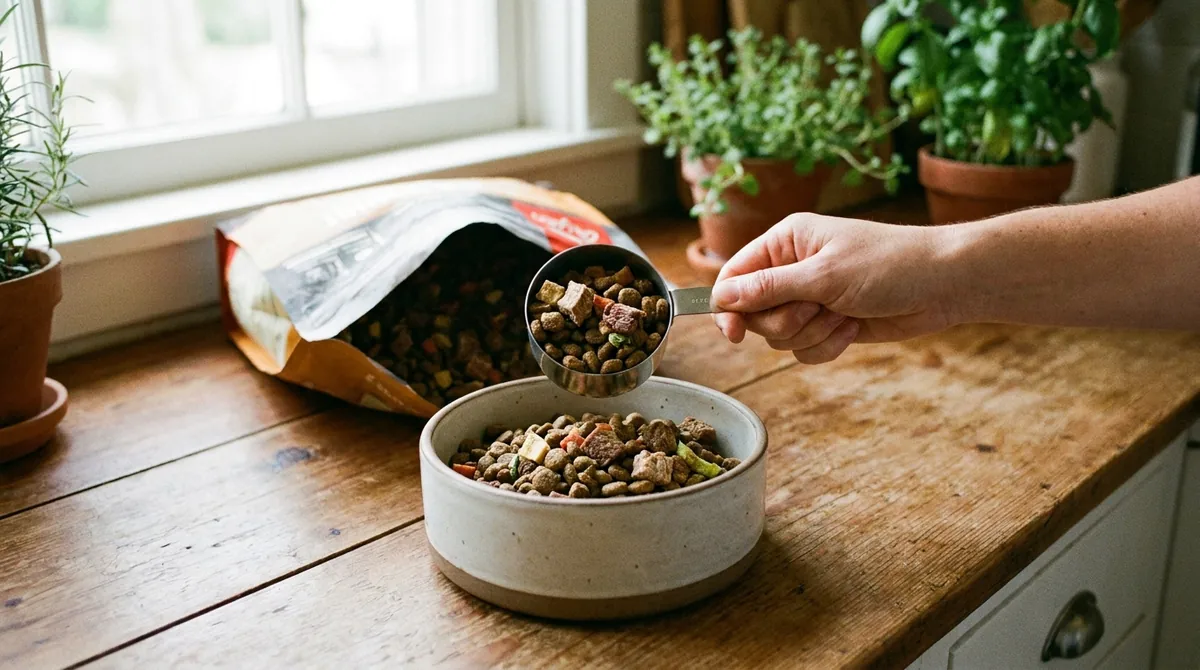
Dogs can generally have small amounts of plain cooked pumpkin or plain canned pumpkin, but pumpkin pie filling is a different product and should not be treated as a dog food. Check the label carefully: the ingredient should be pumpkin, not a sweetened or spiced dessert mixture. Introduce a small amount first and keep it as an occasional addition rather than a cure-all.
Read the can, not the front label
Plain pumpkin and pumpkin pie filling can look similar on a shelf. Pie filling may contain sugar and spices. Choose a product whose ingredient list is simply pumpkin when you intend to share it.
Small servings are enough
Pumpkin contains fiber and moisture, so a large sudden serving can change stool. Start small instead of assuming more will be better.
Do not turn a food into a treatment plan
Owners often reach for pumpkin whenever stool changes. Digestive problems have many causes, and persistent, bloody or severe signs need veterinary assessment rather than repeated home experiments.
Use plain preparation
Fresh pumpkin should be cooked plain and served without butter, sugar, salt or seasoning. Remove the hard stem and skin pieces that are not intended as treats.
Fit it into the day’s food
Pumpkin added to bowls, frozen toys or treats still contributes to the overall diet. Keep the amount modest and consistent if you use it regularly.
A practical plan you can use this week
Set up the easy version
Begin with choose plain pumpkin, check the ingredient list, and portion a small spoonful appropriate to the dog’s size. Keep the first repetitions deliberately easy. A dog who can succeed has a clear behavior to repeat; a dog who is already over threshold or physically struggling is mostly rehearsing the problem.
Make the first repetition obvious
For the first session, offer a tiny amount with the normal food and change nothing else in the diet that day. The goal is not endurance. It is a clean, understandable success that can be repeated before adding duration, distance or distraction.
Progress one variable at a time
Once the easy version is fluent, only repeat if the dog tolerates it well; do not increase automatically because the first serving caused no problem. If performance suddenly falls apart, reduce difficulty rather than repeating the cue more loudly or assuming the dog is being defiant.
Transfer the skill to ordinary life
Real progress comes from using the skill where it matters. label opened canned pumpkin with the date and store it correctly so old food does not become a new source of digestive upset. Short planned repetitions in normal routines are usually more valuable than one long weekend session.
Track the change you can actually see
Use a simple success marker: the dog tolerates the small addition without appetite or stool changes and the main balanced diet remains unchanged. A written weekly note makes gradual improvement visible and helps you avoid changing the plan after one unusually good or difficult day.
Real-World Tip & Practical Observation
If you are testing pumpkin with a puppy or a dog that has a sensitive stomach, use one small measured amount and keep every other treat the same. Owners often introduce pumpkin, a new chew and a different food in the same weekend, then cannot tell which change mattered.
Common mistakes that make the problem harder
- Buying pumpkin pie filling instead of plain pumpkin.
- Using large spoonfuls because pumpkin has a healthy reputation.
- Treating ongoing diarrhea or vomiting with repeated food changes instead of seeking veterinary advice.
- Mixing pumpkin with sweeteners, dairy or spices before serving.
What progress should look like
Pumpkin is a food, not a mandatory supplement. If your dog does well without it, there is no reason to add it. If you use it, consistency and small portions are more useful than large occasional servings.
An owner checklist for the next seven days
Day one is for observation and setup: choose plain pumpkin, check the ingredient list, and portion a small spoonful appropriate to the dog’s size. On the next two days, use this first step: offer a tiny amount with the normal food and change nothing else in the diet that day. Keep sessions short enough that you can stop after a good repetition rather than waiting for the dog to become tired, frustrated or distracted. Write down what happened immediately before the behavior, what you did, and what the dog did next. That simple record is more useful than relying on memory at the end of the week.
From days four through seven, change only one difficulty at a time. only repeat if the dog tolerates it well; do not increase automatically because the first serving caused no problem. Use this practical measure: the dog tolerates the small addition without appetite or stool changes and the main balanced diet remains unchanged. If the numbers or observations get worse for two sessions in a row, make the task easier and rebuild success. The aim is not a perfect dog by Sunday; it is a repeatable routine that gives the dog clear information and gives you evidence that the plan is moving in the right direction.
Frequently asked questions
Is canned pumpkin okay?
Plain canned pumpkin can be convenient. Check that it is not pie filling and review the ingredient list.
Can puppies have pumpkin?
Many can tolerate a tiny amount of plain pumpkin, but introduce new foods cautiously and discuss persistent digestive signs with a veterinarian.
Does pumpkin fix diarrhea?
It may change stool in some dogs, but diarrhea has many causes. Ongoing, severe or bloody diarrhea needs veterinary guidance.
Sources & further reading
Food-safety and nutrition references selected for Can Dogs Eat Pumpkin? Plain Pumpkin vs. Pie Filling Explained. These organizations are independent of Dogtation and are included so readers can verify the underlying guidance.