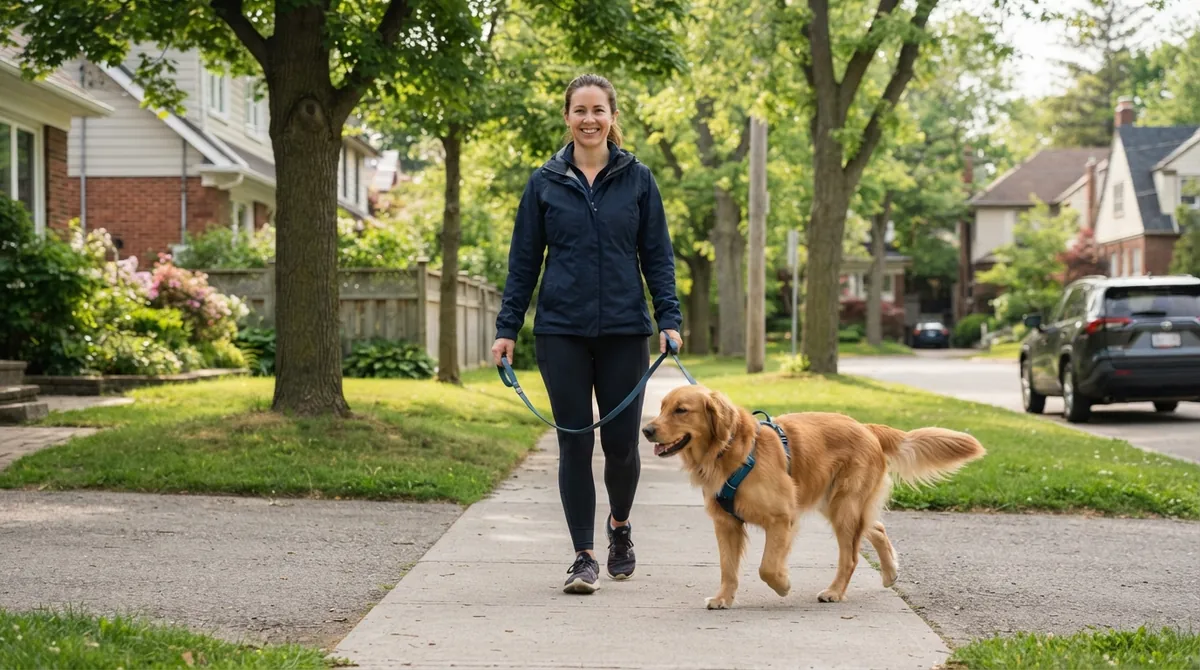
Teach a dog that staying near you keeps the walk moving while pulling makes progress pause, then transfer the skill to real-world distractions.
Separate exercise from training at first
A dog who desperately needs to move and sniff may struggle through a slow lesson. Meet basic activity needs and use very short training blocks.
Reward the location you want
Begin in a low-distraction place and reinforce near your leg every few steps. Frequent payment early creates a strong history in that zone.
Let leash tension change the outcome
When the leash becomes tight, pause or change direction. Resume when slack returns. Avoid a constant tug-of-war that teaches the dog to pull against pressure.
Use sniffing as reinforcement
After a few loose steps, release the dog to investigate a scent. The environment can be more valuable than food, so make access part of your training plan.
Add distractions with distance
Work far enough from dogs, people and traffic that your dog can still think. Gradually close distance as success becomes reliable.
Choose equipment for safety and comfort
A well-fitted harness or collar and secure leash matter more than a miracle product. Equipment cannot replace skill-building or management.
Troubleshoot by lowering difficulty
If pulling suddenly returns, ask whether the route, pace, arousal or distraction level changed. Return to easier repetitions instead of escalating force.
Practical checklist
- Write down what is normal for your dog before changing several things at once.
- Use measured food, secure equipment and environmental management where relevant.
- Review the plan after several days and look for a trend rather than reacting to one unusually good or bad day.
- Stop and seek professional help when pain, breathing trouble, collapse, toxin exposure, severe fear or bite risk enters the picture.
Frequently asked questions
Can breed alone tell me what to do?
No. Breed can provide context, but age, health, body condition, environment and individual temperament should drive decisions.
How do I know whether advice online is enough?
Online guidance is best for education and routine planning. Diagnosis, medication decisions, persistent symptoms, pain and emergencies require veterinary care; serious behavior problems require individualized assessment.
- American Veterinary Society of Animal Behavior — reward-based training guidance
Dogtation summarizes general educational guidance and does not claim that these organizations reviewed this page.