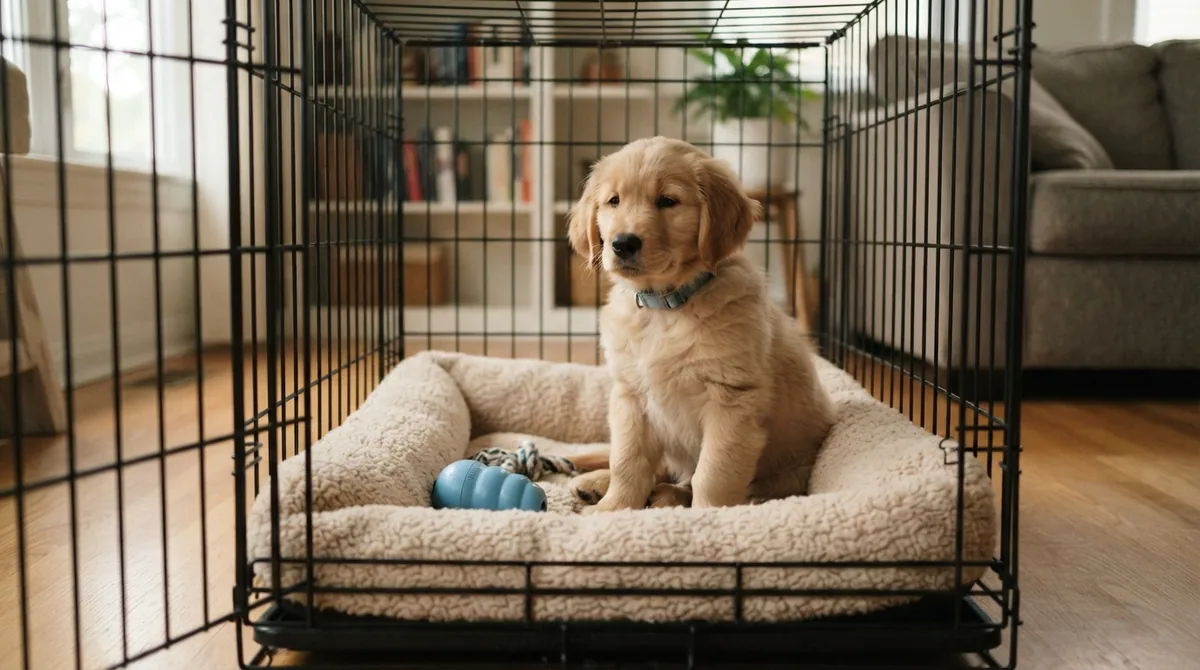
Crate training works best when the crate predicts food, rest and short periods of safety—not sudden isolation. Start with the door open, feed or scatter treats inside, and build duration in seconds before asking for longer stays. A puppy who is screaming, throwing the body at the door or unable to settle is not practicing calm crate behavior and needs an easier step.
Start with the door open
Scatter food inside, feed meals near or in the crate and allow the puppy to enter and exit. The first lesson is simply that approaching the crate predicts good things.
Add duration in tiny steps
Once the puppy enters comfortably, close the door briefly while providing a chew or food toy. Open it before distress escalates. Build seconds into minutes over repeated easy sessions.
Separate crate training from alone training
A puppy can be comfortable in a crate while a person is nearby but panic when left alone. Practice distance and absence separately and gradually.
Plan around toilet needs
A young puppy may genuinely need frequent bathroom breaks. Asking for duration beyond physical capacity creates accidents and distress.
Respond to panic, not just noise
Some protest can occur during adjustment, but sustained panic, frantic escape attempts, drooling or inability to settle deserves a change in plan and possibly professional help.
A practical plan you can use this week
Set up the easy version
Begin with place the crate where the puppy can rest near normal household life, add a safe bed or mat when appropriate, and keep high-value chews reserved for calm crate time. Keep the first repetitions deliberately easy. A dog who can succeed has a clear behavior to repeat; a dog who is already over threshold or physically struggling is mostly rehearsing the problem.
Make the first repetition obvious
For the first session, toss food just inside the doorway, let the puppy enter and leave freely, then begin closing the door for one or two seconds while the puppy is relaxed. The goal is not endurance. It is a clean, understandable success that can be repeated before adding duration, distance or distraction.
Progress one variable at a time
Once the easy version is fluent, increase either duration or distance from the crate, not both at once, and return before mild concern becomes a full panic response. If performance suddenly falls apart, reduce difficulty rather than repeating the cue more loudly or assuming the dog is being defiant.
Transfer the skill to ordinary life
Real progress comes from using the skill where it matters. practice after toilet breaks and a little calm activity, not only when everyone is rushing out of the house. Short planned repetitions in normal routines are usually more valuable than one long weekend session.
Track the change you can actually see
Use a simple success marker: the puppy enters willingly, lies down sooner and can remain relaxed while the owner moves around or briefly leaves the room. A written weekly note makes gradual improvement visible and helps you avoid changing the plan after one unusually good or difficult day.
Real-World Tip & Practical Observation
A common household breakthrough is separating “crate practice” from “departure.” If the crate only appears when the owner leaves for hours, it becomes an alarm bell. Use it for five-minute calm periods while you make coffee, answer email or fold laundry. Those boring repetitions teach that the door closing does not always predict a long absence.
Common mistakes that make the problem harder
- Putting an energetic puppy straight into the crate without a toilet break or chance to decompress.
- Letting a mild whine build into frantic distress before deciding the session was too hard.
- Using the crate as punishment after accidents or chewing.
- Jumping from thirty seconds of comfort to an hour because the puppy was quiet once.
What progress should look like
Comfort is more important than silent endurance. Look for soft posture, normal breathing, chewing, lying down and the ability to wake and resettle. Quietness paired with rigid posture or frantic scanning is not the same thing as relaxation.
An owner checklist for the next seven days
Day one is for observation and setup: place the crate where the puppy can rest near normal household life, add a safe bed or mat when appropriate, and keep high-value chews reserved for calm crate time. On the next two days, use this first step: toss food just inside the doorway, let the puppy enter and leave freely, then begin closing the door for one or two seconds while the puppy is relaxed. Keep sessions short enough that you can stop after a good repetition rather than waiting for the dog to become tired, frustrated or distracted. Write down what happened immediately before the behavior, what you did, and what the dog did next. That simple record is more useful than relying on memory at the end of the week.
From days four through seven, change only one difficulty at a time. increase either duration or distance from the crate, not both at once, and return before mild concern becomes a full panic response. Use this practical measure: the puppy enters willingly, lies down sooner and can remain relaxed while the owner moves around or briefly leaves the room. If the numbers or observations get worse for two sessions in a row, make the task easier and rebuild success. The aim is not a perfect dog by Sunday; it is a repeatable routine that gives the dog clear information and gives you evidence that the plan is moving in the right direction.
Frequently asked questions
Should I ignore all crying?
No. First rule out toilet needs, pain, temperature and true distress. Brief protest may pass, but escalating panic is information that the plan needs to become easier.
How long can a puppy stay in a crate?
Age, toilet capacity, sleep state and individual comfort vary. Crates are management tools, not all-day housing. Young puppies need frequent breaks, movement and social contact.
What if my puppy already hates the crate?
Stop forcing long stays. Rebuild value with open-door feeding, short voluntary entries and very small door-closing steps, or use a pen while retraining.
Sources & further reading
Training and behavior references selected for Crate Training a Puppy Without Creating a Battle. These organizations are independent of Dogtation and are included so readers can verify the underlying guidance.