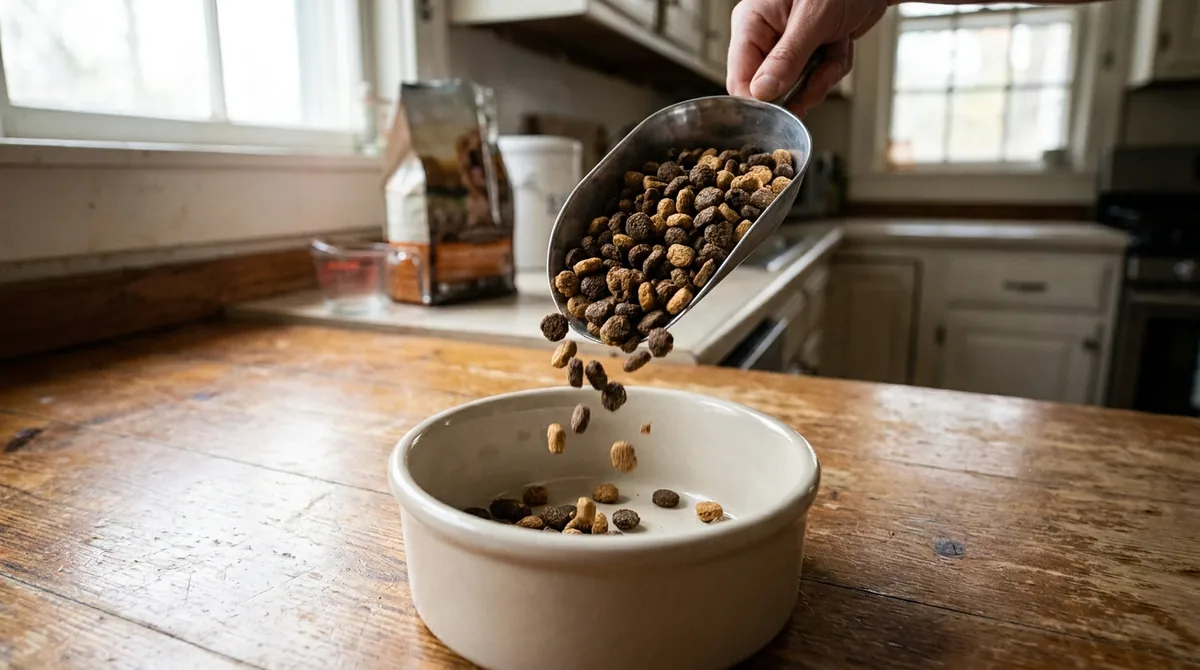
A practical way to turn feeding-label guidance into a portion plan that accounts for calories, treats, body condition and real-world changes.
Start with calories, not cups
Dog-food cups are not interchangeable. A cup of one dry food may contain far more calories than a cup of another, and canned or fresh foods use completely different serving sizes. Find the calorie statement on the package, usually expressed as kcal per cup, can, tray or kilogram. Use a calorie calculator only as a starting estimate, then translate that estimate into the amount of the exact food you serve.
Treat the feeding guide as a starting range
Manufacturer charts are built for broad groups of dogs. They cannot know whether your dog is neutered, highly athletic, sedentary, recovering from illness or receiving a large number of treats. Start near the appropriate range, measure consistently and watch the dog rather than treating the chart as a prescription.
Use body condition to adjust
A healthy target is better judged with body-condition scoring than by chasing a breed-average weight. You should generally be able to feel the ribs with light pressure and see a waist behind the ribs, though coat and body shape can make this harder. If your dog is steadily gaining or losing, adjust the daily calories gradually and discuss unexplained changes with a veterinarian.
Count everything that carries calories
Training treats, dental chews, peanut butter, table scraps and food stuffed into toys all count. A useful rule is to keep extras modest so the complete diet remains nutritionally balanced. For dogs doing lots of training, reserve part of the measured daily food to use as rewards.
Make changes slowly
Abrupt food changes commonly trigger gastrointestinal upset. Unless a veterinarian tells you otherwise, transition gradually by mixing increasing amounts of the new diet over several days. Dogs with pancreatitis, kidney disease, food allergy, growth needs or other medical issues may require individualized nutrition advice.
A simple weekly check-in
Measure food with the same scoop or a kitchen scale, check body condition weekly, note treat intake and reassess after changes in activity. Puppies, seniors and working dogs can change quickly, so the portion that worked a few months ago may no longer be right.
Practical checklist
- Observe your dog’s normal routine before making big changes.
- Change one variable at a time so you can tell what actually helps.
- Use measured portions, safe equipment and management where relevant.
- Write down changes in appetite, behavior, stool, activity or comfort if health is involved.
- Escalate to a veterinarian or qualified behavior professional when red flags, pain, panic or safety risk appear.
Frequently asked questions
Should every dog follow the same routine?
No. Breed tendencies can be useful background, but individual age, health, learning history and environment are more important than a generic rule.
How quickly should I expect a change?
Simple management changes can help immediately, while fitness, weight, training and behavior changes usually require consistent practice over days or weeks.
When should I stop using online advice and call a professional?
Contact a veterinarian for sudden health changes, pain, repeated vomiting, breathing trouble, collapse, toxin exposure or other urgent signs. For aggression, panic or bite risk, use individualized professional support.
Editorial note: DogWithDog content is educational and does not diagnose, prescribe or replace veterinary care.