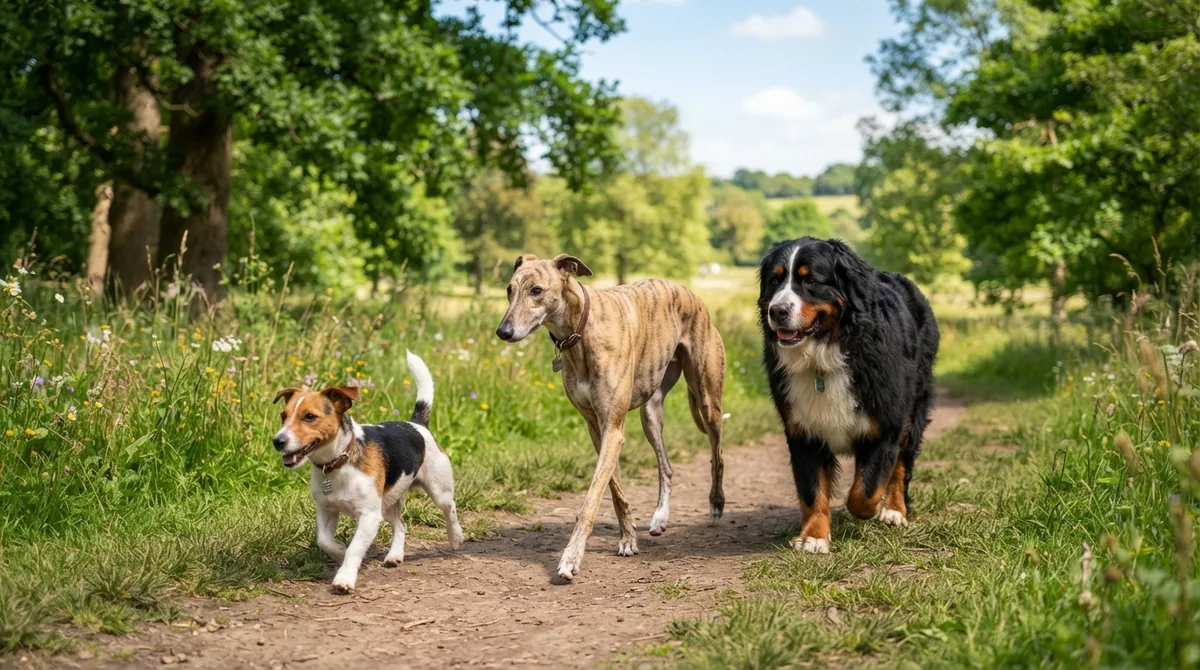
A puppy offers more control over early routines but requires intensive toilet trips, supervision, chewing management, socialization and adolescent training. An adult dog may arrive with established habits and a more visible temperament, but can still need adjustment and retraining. The better choice is the life stage whose daily workload matches your schedule, not the one that feels most emotionally appealing in the moment.
Puppies require frequent supervision
Young dogs need many toilet opportunities, protected sleep, safe chewing outlets and gradual exposure to the world. Long unsupervised workdays are difficult without a reliable care plan.
Adults can be easier to assess
With an adult, size, coat and much of the social style are already visible. Foster homes and previous owners may provide useful information about walking, alone time and household habits.
Adolescence is its own stage
A six-to-eighteen-month dog may look physically mature while still having inconsistent focus, strong exploration and changing social behavior. Do not assume “not a puppy” means fully settled.
Training history can be changed
Adults can learn new routines. Existing habits may require work, but age does not prevent reward-based training.
Lifestyle stability matters
Choose a stage that fits work hours, childcare, travel and available help for the next year, not only the next few weeks.
A practical plan you can use this week
Set up the easy version
Begin with write a realistic weekday schedule with toilet, feeding, exercise, training and alone-time blocks for both a puppy and an adult. Keep the first repetitions deliberately easy. A dog who can succeed has a clear behavior to repeat; a dog who is already over threshold or physically struggling is mostly rehearsing the problem.
Make the first repetition obvious
For the first session, ask shelters, rescues or breeders what is actually known about the individual dog’s sleep, handling, sociability and alone-time experience. The goal is not endurance. It is a clean, understandable success that can be repeated before adding duration, distance or distraction.
Progress one variable at a time
Once the easy version is fluent, arrange care support before adoption rather than hoping the dog will immediately adapt to a full workday. If performance suddenly falls apart, reduce difficulty rather than repeating the cue more loudly or assuming the dog is being defiant.
Transfer the skill to ordinary life
Real progress comes from using the skill where it matters. consider foster-to-adopt or meeting several adult dogs if predictability matters more to you than raising a puppy from the beginning. Short planned repetitions in normal routines are usually more valuable than one long weekend session.
Track the change you can actually see
Use a simple success marker: the chosen life stage fits the household without relying on long confinement, skipped socialization or unrealistic assumptions about immediate house training. A written weekly note makes gradual improvement visible and helps you avoid changing the plan after one unusually good or difficult day.
Real-World Tip & Practical Observation
The hidden puppy cost is not just money—it is attention fragmentation. For several months, a puppy can interrupt calls, sleep and errands. If that sounds incompatible with current life, an adult dog is not a “second choice”; it may be the more responsible and enjoyable match.
Common mistakes that make the problem harder
- Choosing a puppy because you assume adults cannot bond deeply.
- Assuming an adult dog arrives fully trained or can immediately stay alone all day.
- Underestimating adolescent behavior changes after the cute puppy stage.
- Choosing based on age without considering the individual dog’s actual history and temperament.
What progress should look like
The right decision should reduce pressure on both sides. If the household can meet the dog’s developmental needs consistently, training becomes much easier and the relationship has room to grow.
An owner checklist for the next seven days
Day one is for observation and setup: write a realistic weekday schedule with toilet, feeding, exercise, training and alone-time blocks for both a puppy and an adult. On the next two days, use this first step: ask shelters, rescues or breeders what is actually known about the individual dog’s sleep, handling, sociability and alone-time experience. Keep sessions short enough that you can stop after a good repetition rather than waiting for the dog to become tired, frustrated or distracted. Write down what happened immediately before the behavior, what you did, and what the dog did next. That simple record is more useful than relying on memory at the end of the week.
From days four through seven, change only one difficulty at a time. arrange care support before adoption rather than hoping the dog will immediately adapt to a full workday. Use this practical measure: the chosen life stage fits the household without relying on long confinement, skipped socialization or unrealistic assumptions about immediate house training. If the numbers or observations get worse for two sessions in a row, make the task easier and rebuild success. The aim is not a perfect dog by Sunday; it is a repeatable routine that gives the dog clear information and gives you evidence that the plan is moving in the right direction.
Frequently asked questions
Do adult dogs bond with new owners?
Yes. Many adults form strong relationships after adoption. Bonding depends on safety, predictability and positive experience, not only puppyhood.
Is an older dog always calmer?
Often, but not always. Energy, breed, health and individual temperament matter.
Should first-time owners get a puppy?
Not necessarily. A well-matched adult with known behavior can be easier for many first-time owners than an eight-week-old puppy.
Sources & further reading
Breed and ownership references selected for Puppy or Adult Dog? Choosing the Better Fit for Your Routine. These organizations are independent of Dogtation and are included so readers can verify the underlying guidance.