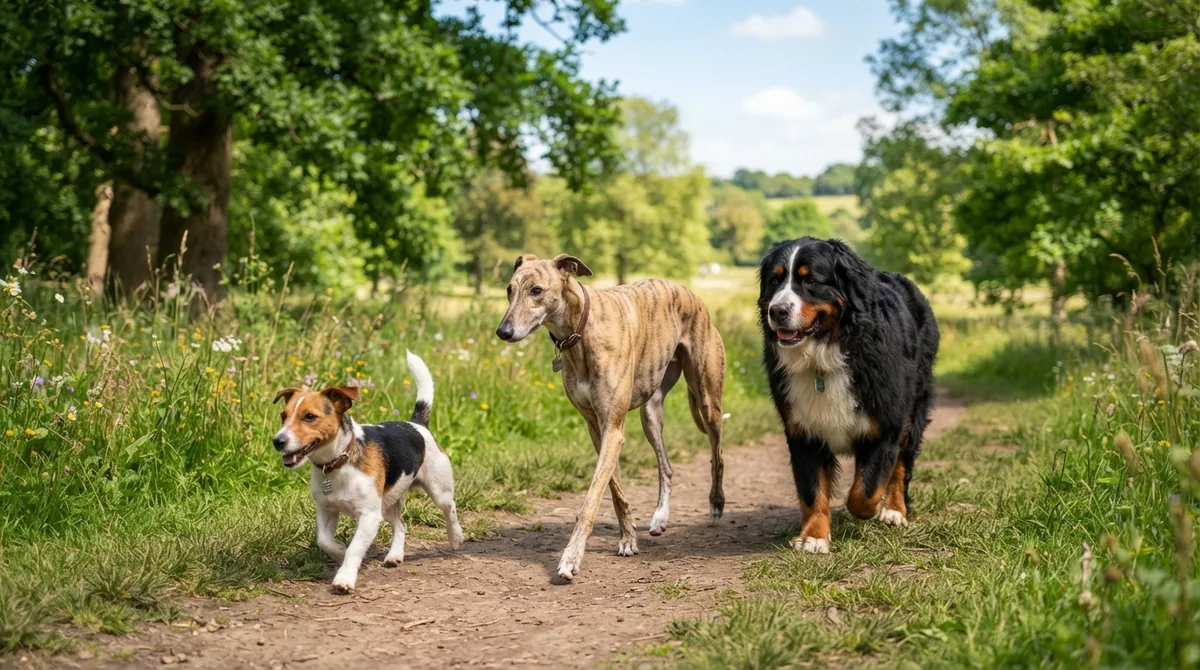
Dog size affects much more than floor space. Food, medication, boarding, crates, vehicle fit, lifting ability, exercise style and damage potential all scale differently. A large calm dog may suit an apartment better than a tiny high-energy terrier, while a small dog may be easier to transport but more vulnerable around young children or rough play.
Think in daily logistics, not square metres
Ask where the dog will sleep, eat, pass through doors, ride in the car and wait safely during visitors. A home can be small and still work well if movement and exercise routines are realistic.
Costs change with body size
Food, preventives, boarding fees, beds, crates and some veterinary medications often cost more for larger dogs. Budget the adult size, not the puppy size.
Handling matters
Can every adult in the home safely lift or steady the dog if it is injured, frightened or needs help into a vehicle? Smaller dogs are easier to carry, but their bodies can be more fragile.
Children and other pets add context
A very small dog can be at risk from accidental falls or rough handling, while a large exuberant adolescent can knock people over. Temperament and supervision matter more than size alone.
Exercise is not proportional to height
Some small breeds need intense daily activity and some giant breeds prefer moderate routines. Research the actual breed or individual rather than using size as an energy shortcut.
A practical plan you can use this week
Set up the easy version
Begin with estimate adult weight and height, then price the food, crate, bed, harness and transport setup that size would require. Keep the first repetitions deliberately easy. A dog who can succeed has a clear behavior to repeat; a dog who is already over threshold or physically struggling is mostly rehearsing the problem.
Make the first repetition obvious
For the first session, walk through doorways, stairs, lifts and vehicle loading with adult size in mind. The goal is not endurance. It is a clean, understandable success that can be repeated before adding duration, distance or distraction.
Progress one variable at a time
Once the easy version is fluent, compare the same practical questions for a small, medium and large candidate rather than deciding from appearance. If performance suddenly falls apart, reduce difficulty rather than repeating the cue more loudly or assuming the dog is being defiant.
Transfer the skill to ordinary life
Real progress comes from using the skill where it matters. ask owners of adult dogs what costs and handling challenges surprised them most after puppyhood. Short planned repetitions in normal routines are usually more valuable than one long weekend session.
Track the change you can actually see
Use a simple success marker: the chosen size works for transport, housing rules, physical handling and budget without depending on unrealistic assumptions about energy. A written weekly note makes gradual improvement visible and helps you avoid changing the plan after one unusually good or difficult day.
Real-World Tip & Practical Observation
An overlooked issue is emergency handling. Picture the dog unable to use stairs after an injury. Could you move a 35-kg dog safely? Conversely, if a 4-kg dog lives with toddlers or large dogs, can you create protected spaces? Thinking about the hard day—not only the normal day—often clarifies size decisions.
Common mistakes that make the problem harder
- Equating apartment living with “must get a tiny dog”.
- Forgetting that puppies can multiply in size within months.
- Budgeting equipment and boarding at puppy scale.
- Assuming a large garden replaces walks, training and social time.
What progress should look like
The right size is the one you can manage through the dog’s whole life. Comfort with adult transport, handling and costs is a better signal than whether a puppy currently fits on your lap.
An owner checklist for the next seven days
Day one is for observation and setup: estimate adult weight and height, then price the food, crate, bed, harness and transport setup that size would require. On the next two days, use this first step: walk through doorways, stairs, lifts and vehicle loading with adult size in mind. Keep sessions short enough that you can stop after a good repetition rather than waiting for the dog to become tired, frustrated or distracted. Write down what happened immediately before the behavior, what you did, and what the dog did next. That simple record is more useful than relying on memory at the end of the week.
From days four through seven, change only one difficulty at a time. compare the same practical questions for a small, medium and large candidate rather than deciding from appearance. Use this practical measure: the chosen size works for transport, housing rules, physical handling and budget without depending on unrealistic assumptions about energy. If the numbers or observations get worse for two sessions in a row, make the task easier and rebuild success. The aim is not a perfect dog by Sunday; it is a repeatable routine that gives the dog clear information and gives you evidence that the plan is moving in the right direction.
Frequently asked questions
Are big dogs always more expensive?
Many recurring costs rise with size, but grooming, insurance and breed-specific needs can make some small dogs expensive too.
Do small dogs need less training?
No. Leash skills, recall, handling and household manners matter at every size.
Can a large dog live in an apartment?
Some can, if exercise, toileting access, building rules and noise are manageable. Energy and temperament matter more than square footage alone.
Sources & further reading
Breed and ownership references selected for Small, Medium or Large Dog? Choosing the Right Size for Your Home. These organizations are independent of Dogtation and are included so readers can verify the underlying guidance.