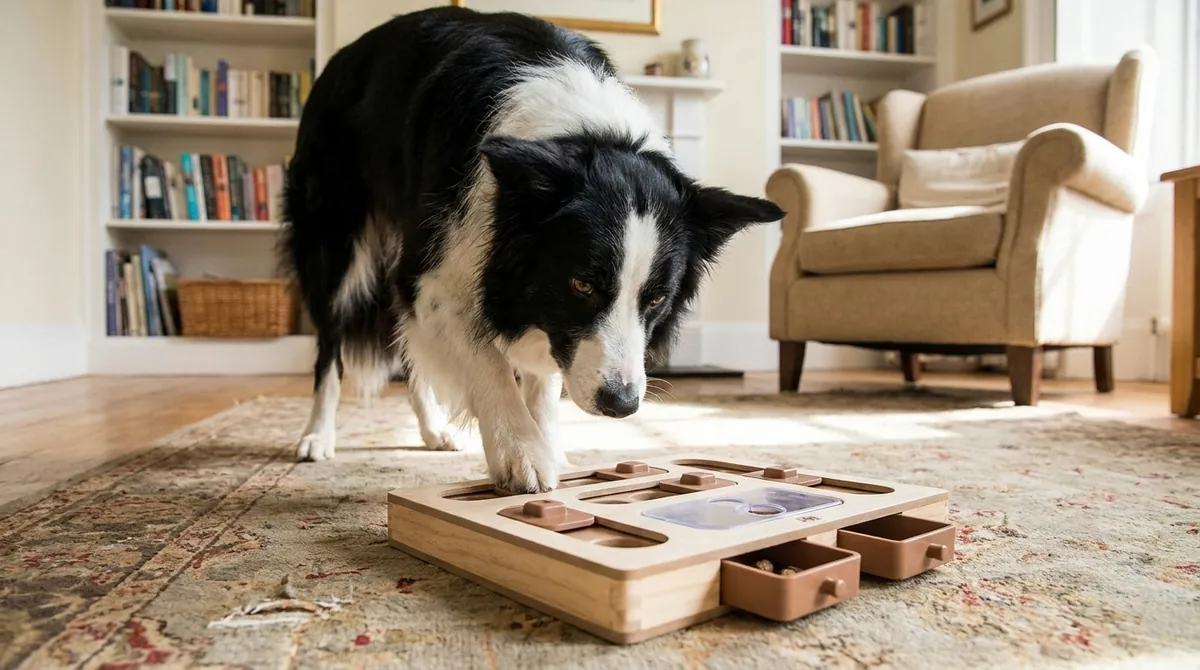
Use sniffing, searching, chewing and short training games to give your dog purposeful mental work.
Sniffing is real work
Scatter part of a meal in grass, use a snuffle mat or hide food around a room. Scent work lets dogs control the pace and use a primary sense.
Rotate instead of buying endlessly
Keep a small set of toys and rotate access. Novelty can return when a familiar toy disappears for several days.
Teach tiny skills
Targeting a hand, finding a toy by name, stepping onto a platform or learning a trick can provide focused mental effort.
Use food safely
Puzzle toys and stuffed feeders should be size-appropriate and supervised until you know how the dog interacts with them. Include the calories in the daily plan.
Match arousal to the time of day
Fast chase games may not be ideal immediately before bedtime. Combine active enrichment with chewing, sniffing and settling skills.
Practical checklist
- Observe your dog’s normal routine before making big changes.
- Change one variable at a time so you can tell what actually helps.
- Use measured portions, safe equipment and management where relevant.
- Write down changes in appetite, behavior, stool, activity or comfort if health is involved.
- Escalate to a veterinarian or qualified behavior professional when red flags, pain, panic or safety risk appear.
Frequently asked questions
Should every dog follow the same routine?
No. Breed tendencies can be useful background, but individual age, health, learning history and environment are more important than a generic rule.
How quickly should I expect a change?
Simple management changes can help immediately, while fitness, weight, training and behavior changes usually require consistent practice over days or weeks.
When should I stop using online advice and call a professional?
Contact a veterinarian for sudden health changes, pain, repeated vomiting, breathing trouble, collapse, toxin exposure or other urgent signs. For aggression, panic or bite risk, use individualized professional support.
Editorial note: DogWithDog content is educational and does not diagnose, prescribe or replace veterinary care.