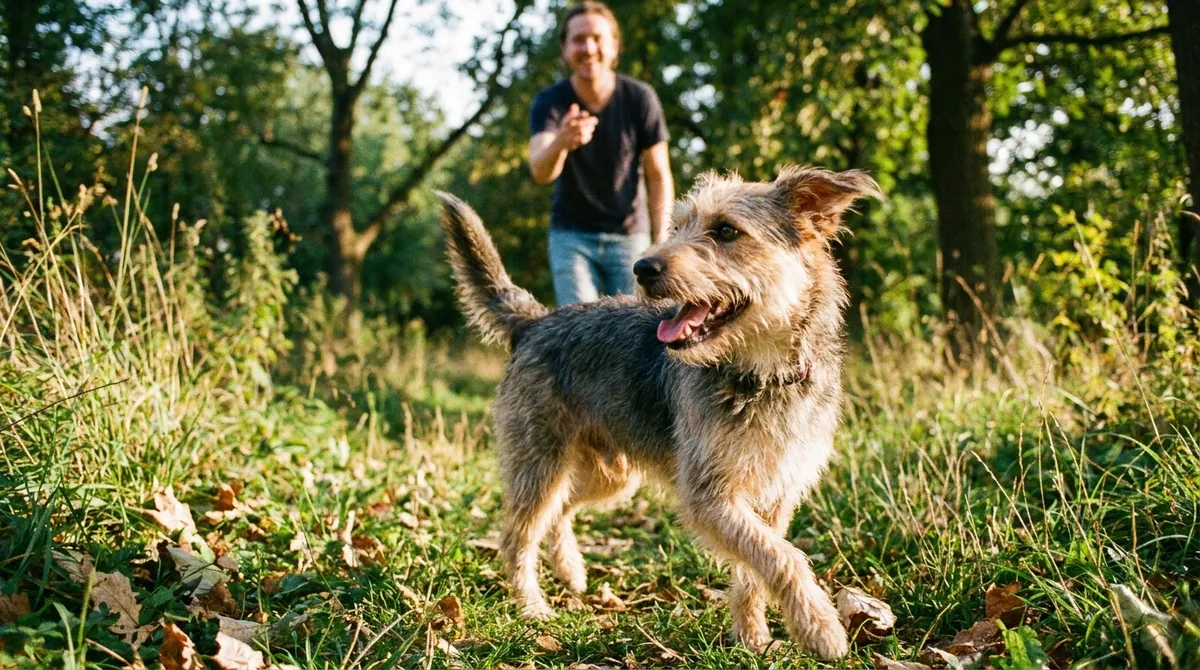
Build recall by protecting the cue, paying well and avoiding repetitions your dog has learned to ignore.
Do not spend the cue cheaply
If you call when you know the dog is unlikely to respond, the cue becomes background noise. Use a long line and choose situations where you can help the dog succeed.
Make arrival valuable
Reward generously, especially outdoors. Sometimes release the dog back to play after the reward so coming to you does not always predict the end of fun.
Avoid repeating the cue
Say it once, then use movement, distance or the long line to help. Repeating 'come, come, come' teaches that the first several cues are optional.
Practice surprise recalls
Call from easy situations throughout the day, reward and release. Tiny successful repetitions build a history before you need recall in a difficult moment.
Use emergency management
No recall is infallible around traffic, wildlife or other high-risk distractions. Leashes, long lines and secure fencing remain part of responsible training.
Practical checklist
- Observe your dog’s normal routine before making big changes.
- Change one variable at a time so you can tell what actually helps.
- Use measured portions, safe equipment and management where relevant.
- Write down changes in appetite, behavior, stool, activity or comfort if health is involved.
- Escalate to a veterinarian or qualified behavior professional when red flags, pain, panic or safety risk appear.
Frequently asked questions
Should every dog follow the same routine?
No. Breed tendencies can be useful background, but individual age, health, learning history and environment are more important than a generic rule.
How quickly should I expect a change?
Simple management changes can help immediately, while fitness, weight, training and behavior changes usually require consistent practice over days or weeks.
When should I stop using online advice and call a professional?
Contact a veterinarian for sudden health changes, pain, repeated vomiting, breathing trouble, collapse, toxin exposure or other urgent signs. For aggression, panic or bite risk, use individualized professional support.
Editorial note: DogWithDog content is educational and does not diagnose, prescribe or replace veterinary care.