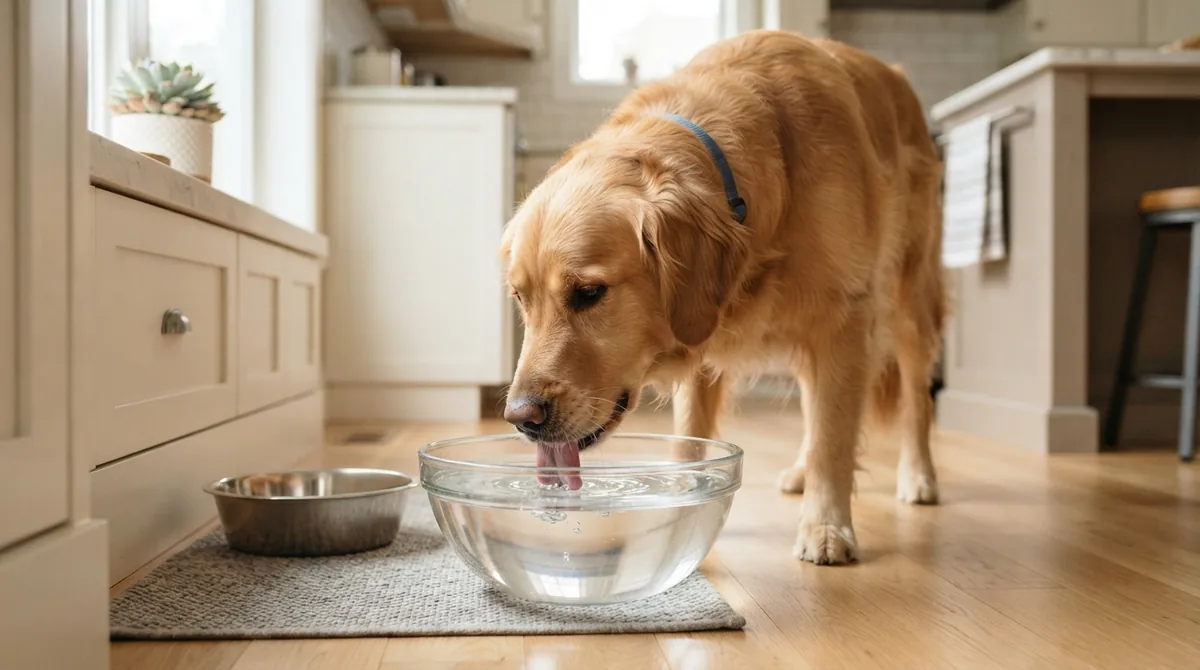
Learn how size, diet, weather, activity and health change a dog's water needs—and which drinking changes deserve attention.
There is no single perfect number
Water needs vary with body size, food moisture, activity, temperature and health. A dry-food dog may drink noticeably more from the bowl than a dog eating a high-moisture diet. A calculator can provide a baseline, but access to clean water and observation of your dog's normal pattern are more useful than forcing a target.
Why activity and weather matter
Panting is a major cooling mechanism for dogs, so warm weather and exercise can raise fluid needs substantially. Carry water on longer walks, offer breaks and avoid pushing activity in heat. Brachycephalic, elderly, very young and medically vulnerable dogs deserve extra caution.
What counts as a meaningful change
A dog that suddenly empties the bowl repeatedly, urinates much more than usual or seems unable to keep water down should not be managed by simply changing the water allowance. Increased thirst can accompany many medical problems, while reduced drinking may occur with nausea, pain or other illness.
Make water easier to access
Place bowls where the dog spends time, wash them regularly and refill with fresh water. Multi-dog homes may need several stations. On trips, bring familiar water and a portable bowl. Do not rely on a single outdoor bowl that can tip, freeze or become contaminated.
When to call a veterinarian
Contact your veterinarian if a clear change in thirst persists, especially when paired with vomiting, diarrhea, lethargy, weight change, changes in urination or a known medical condition. Inability to drink, repeated vomiting or signs of heat illness can be urgent.
Practical checklist
- Observe your dog’s normal routine before making big changes.
- Change one variable at a time so you can tell what actually helps.
- Use measured portions, safe equipment and management where relevant.
- Write down changes in appetite, behavior, stool, activity or comfort if health is involved.
- Escalate to a veterinarian or qualified behavior professional when red flags, pain, panic or safety risk appear.
Frequently asked questions
Should every dog follow the same routine?
No. Breed tendencies can be useful background, but individual age, health, learning history and environment are more important than a generic rule.
How quickly should I expect a change?
Simple management changes can help immediately, while fitness, weight, training and behavior changes usually require consistent practice over days or weeks.
When should I stop using online advice and call a professional?
Contact a veterinarian for sudden health changes, pain, repeated vomiting, breathing trouble, collapse, toxin exposure or other urgent signs. For aggression, panic or bite risk, use individualized professional support.
Editorial note: DogWithDog content is educational and does not diagnose, prescribe or replace veterinary care.