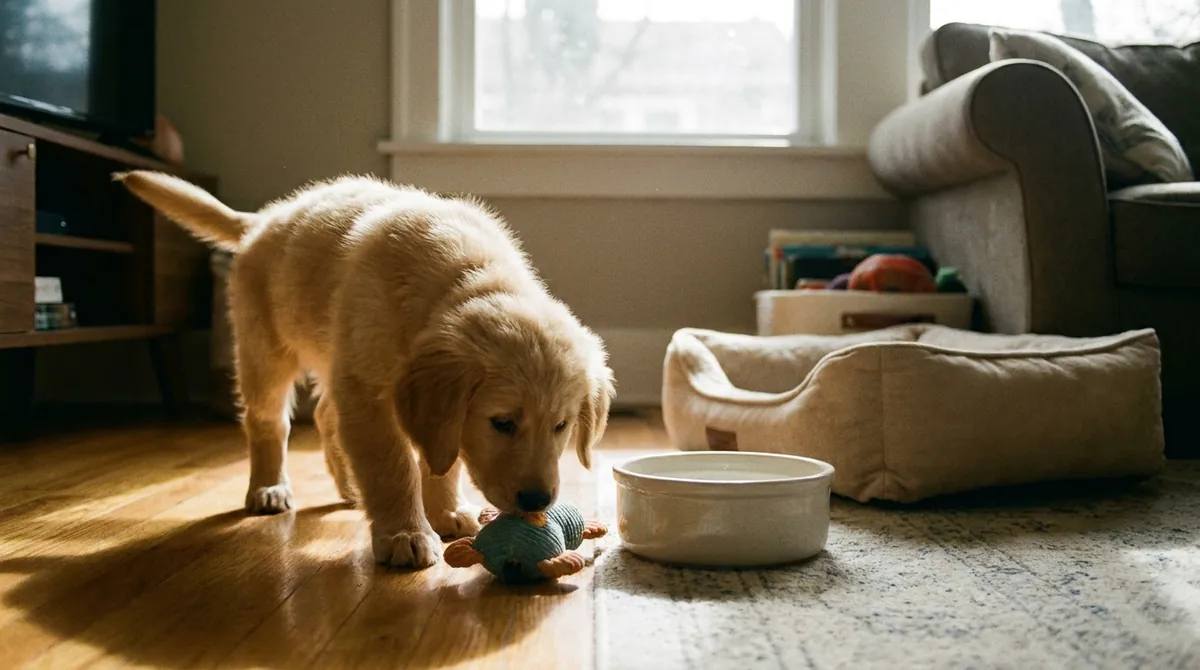
A day-by-day framework for sleep, toilet trips, bonding, handling and preventing overwhelm during the first week.
Your first priority is predictability
A new puppy has lost every familiar smell, routine and social cue at once. Keep the first days simple: the same sleep area, regular meals, frequent toilet trips, short play periods and lots of sleep.
Set up before problems happen
Use gates or a puppy-safe pen to limit access to cords, shoes, rubbish and unsafe plants. Place appropriate chew items where biting usually happens. Management is not a training failure; it prevents the puppy rehearsing habits you later have to undo.
Build a toilet rhythm
Take the puppy out after waking, eating, drinking, play and active exploration. Reward immediately after toileting in the correct place. Accidents are information about timing or supervision, not a reason for punishment.
Protect sleep
Young puppies need a remarkable amount of rest. Overtired puppies often become more mouthy, frantic and unable to learn. Plan quiet periods instead of filling every waking minute with visitors and training.
Start with micro-lessons
Name response, following a food lure, trading a toy and calmly accepting brief touch can all begin in sessions that last less than a minute. Stop while the puppy is still successful.
Arrange veterinary care
Confirm vaccine timing, parasite prevention, microchip information, diet and any health concerns with your veterinarian. Socialization should be thoughtful and safe rather than complete isolation until every vaccine is finished; your vet can advise based on local disease risk.
Practical checklist
- Observe your dog’s normal routine before making big changes.
- Change one variable at a time so you can tell what actually helps.
- Use measured portions, safe equipment and management where relevant.
- Write down changes in appetite, behavior, stool, activity or comfort if health is involved.
- Escalate to a veterinarian or qualified behavior professional when red flags, pain, panic or safety risk appear.
Frequently asked questions
Should every dog follow the same routine?
No. Breed tendencies can be useful background, but individual age, health, learning history and environment are more important than a generic rule.
How quickly should I expect a change?
Simple management changes can help immediately, while fitness, weight, training and behavior changes usually require consistent practice over days or weeks.
When should I stop using online advice and call a professional?
Contact a veterinarian for sudden health changes, pain, repeated vomiting, breathing trouble, collapse, toxin exposure or other urgent signs. For aggression, panic or bite risk, use individualized professional support.
Editorial note: DogWithDog content is educational and does not diagnose, prescribe or replace veterinary care.