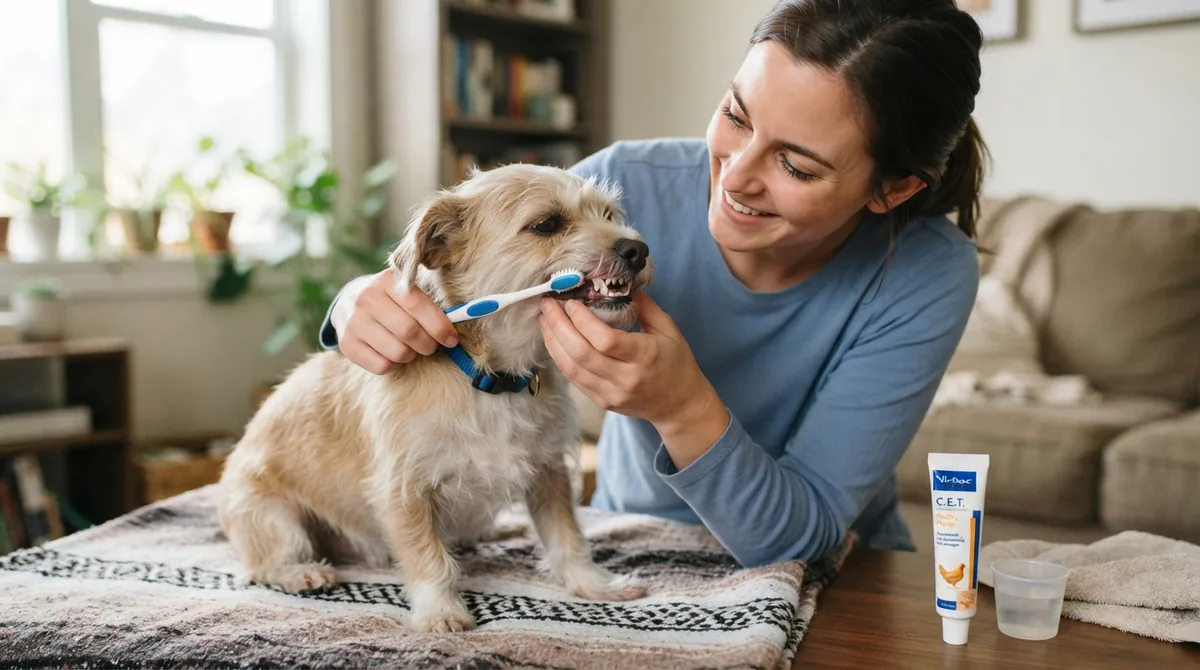
Build dental care around gradual handling, dog-safe products and consistency instead of trying to do everything on day one.
Start with comfort around handling
Touch the cheek, lift the lip briefly and reward. Build duration over days. Forcing the mouth open can create resistance that makes future care harder.
Use dog-specific toothpaste
Human toothpaste is not designed to be swallowed by dogs and some products may contain unsafe ingredients. Use veterinary-approved pet toothpaste and an appropriate brush.
Brush the outer surfaces
Plaque accumulates along the gumline. You do not need to open the mouth dramatically to reach many important surfaces.
Frequency beats perfection
A short routine performed regularly is more valuable than an ambitious session that happens once a month.
Know what home care cannot fix
Bad breath, bleeding gums, loose or fractured teeth, facial swelling, oral pain or difficulty eating need veterinary evaluation. Existing calculus may require professional dental treatment.
Practical checklist
- Observe your dog’s normal routine before making big changes.
- Change one variable at a time so you can tell what actually helps.
- Use measured portions, safe equipment and management where relevant.
- Write down changes in appetite, behavior, stool, activity or comfort if health is involved.
- Escalate to a veterinarian or qualified behavior professional when red flags, pain, panic or safety risk appear.
Frequently asked questions
Should every dog follow the same routine?
No. Breed tendencies can be useful background, but individual age, health, learning history and environment are more important than a generic rule.
How quickly should I expect a change?
Simple management changes can help immediately, while fitness, weight, training and behavior changes usually require consistent practice over days or weeks.
When should I stop using online advice and call a professional?
Contact a veterinarian for sudden health changes, pain, repeated vomiting, breathing trouble, collapse, toxin exposure or other urgent signs. For aggression, panic or bite risk, use individualized professional support.
Editorial note: DogWithDog content is educational and does not diagnose, prescribe or replace veterinary care.