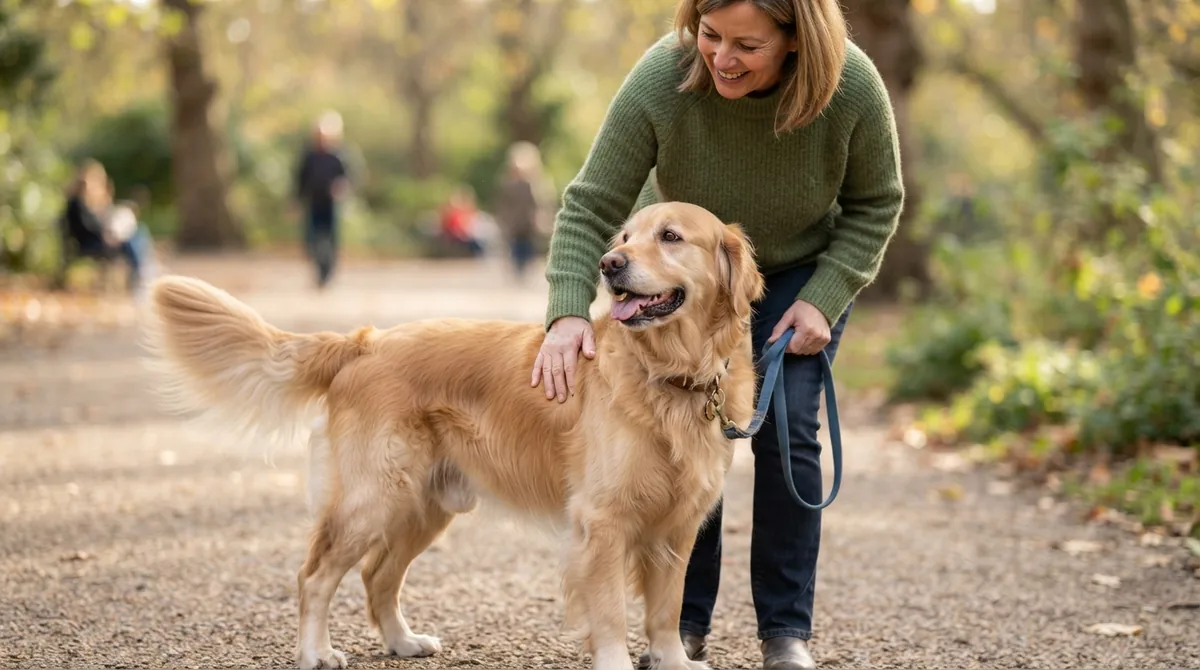
Read the whole dog—posture, movement, face, tail and context—rather than relying on one signal such as a wagging tail.
Loose versus stiff matters
A relaxed dog usually moves fluidly. Stiff posture, freezing or sudden stillness can signal discomfort even when the dog is not growling.
A wag is not always friendly
Tail height, speed, tension and whole-body movement matter. A high stiff wag can occur during arousal or conflict.
Look at the mouth and eyes
Soft eyes and a relaxed open mouth differ from hard staring, tightly closed lips or repeated lip licking in a stressful context.
Notice weight shifts
Leaning away, crouching, hiding behind a person or repeatedly trying to leave are requests for distance.
Respect growls
A growl communicates discomfort. Punishing it may remove a useful warning while leaving the underlying emotion intact.
Context changes meaning
Yawning after waking is normal; repeated yawning during handling may signal stress. Build your interpretation from clusters of signals and the situation.
Practical checklist
- Observe your dog’s normal routine before making big changes.
- Change one variable at a time so you can tell what actually helps.
- Use measured portions, safe equipment and management where relevant.
- Write down changes in appetite, behavior, stool, activity or comfort if health is involved.
- Escalate to a veterinarian or qualified behavior professional when red flags, pain, panic or safety risk appear.
Frequently asked questions
Should every dog follow the same routine?
No. Breed tendencies can be useful background, but individual age, health, learning history and environment are more important than a generic rule.
How quickly should I expect a change?
Simple management changes can help immediately, while fitness, weight, training and behavior changes usually require consistent practice over days or weeks.
When should I stop using online advice and call a professional?
Contact a veterinarian for sudden health changes, pain, repeated vomiting, breathing trouble, collapse, toxin exposure or other urgent signs. For aggression, panic or bite risk, use individualized professional support.
Editorial note: DogWithDog content is educational and does not diagnose, prescribe or replace veterinary care.